-
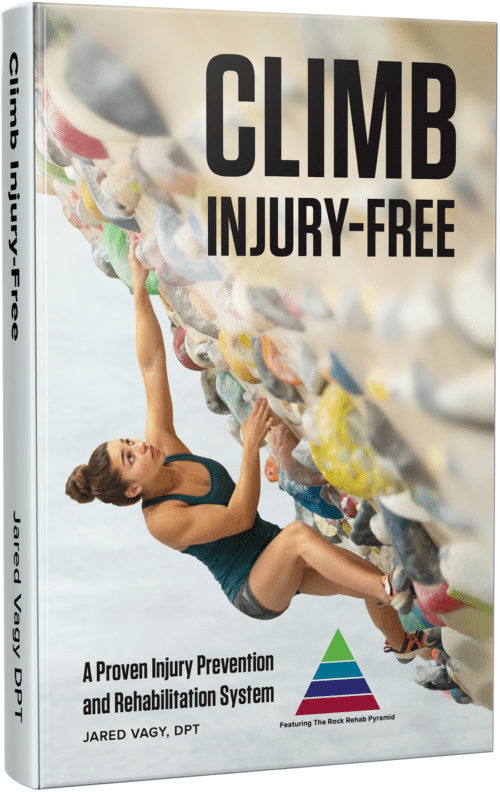 Has injury prevented you from climbing harder? Whether you're a professional athlete or a novice climber, "Climb Injury-Free" is the guide that will teach you how to climb stronger and pain-free. The book features the "Rock Rehab Pyramid." A step-by-step rehabilitation and injury prevention system designed specifically for rock climbers. The goal of the four-phase system is to take you from the pain, inflammation and tissue overload stage to gain full mobility, strength and eventually pain-free climbing movement. Language: English Paperback: 252 pages ISBN-10: 0692831894 ISBN-13: 978-0692831892 Item Weight: 1 pound
 -
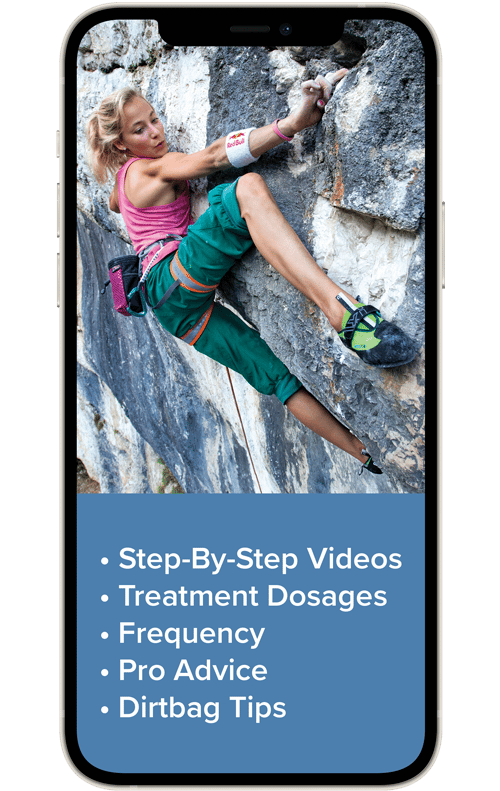 The "Rock Rehab Pyramid" videos will take you through how to prevent and rehabilitate the 10 most common climbing injuries. Over 80 videos contain exercises and climbing movement tips featuring professional climbers Sasha DiGiulian, Jonathan Siegrist and Josh Levin. Buy the package of videos and watch them on all of your devices online; anytime and anywhere.
- Register on-line to view the Rock Rehab Pyramid videos
- Access from any computer, tablet or mobile phone
- Prevent injuries with detailed climbing technique videos
- Watch professional climbers perform step-by-step exercises
-
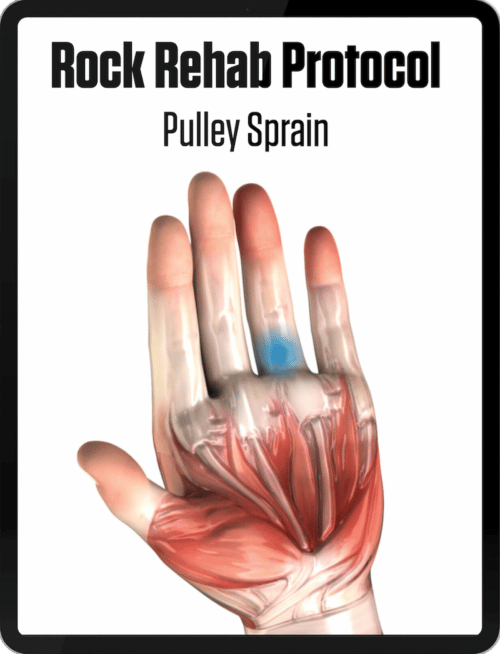 This “Rock Rehab Protocol” is designed to take you step-by-step through the entire rehabilitation process
- Learn how to diagnose your injury with orthopedic tests
- Choose a rehab category based on your test results
- Follow the specific protocol for your rehab category
- Return to climbing at full strength and injury-free
-
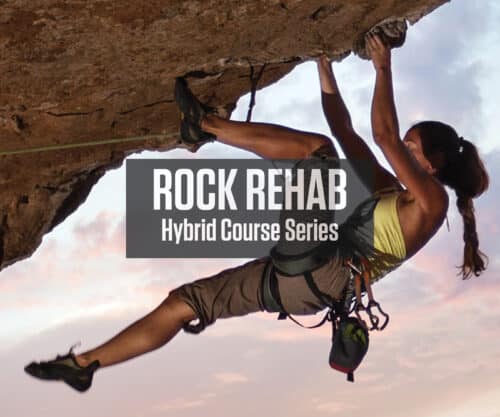 This rock climbing injury continuing education course series is for medical professionals looking to advance their knowledge in assessing, diagnosing and treating injuries with rock climbers. The material is highly interactive with an emphasis on case based learning and practical application. The course series is divided into six units. For each unit, you will access and view pre-recorded lectures on the unit’s topic, read associated articles, and meet for zoom live sessions to problem solve rock climbing patient cases related to the material. The course series is comprehensive and by the conclusion you will have a strong understanding of how to rehabilitate rock climbing injuries. All registration fees are fully refundable up to 48 hours before the first live session. This Registration is for the 2027 Cohort.
 -
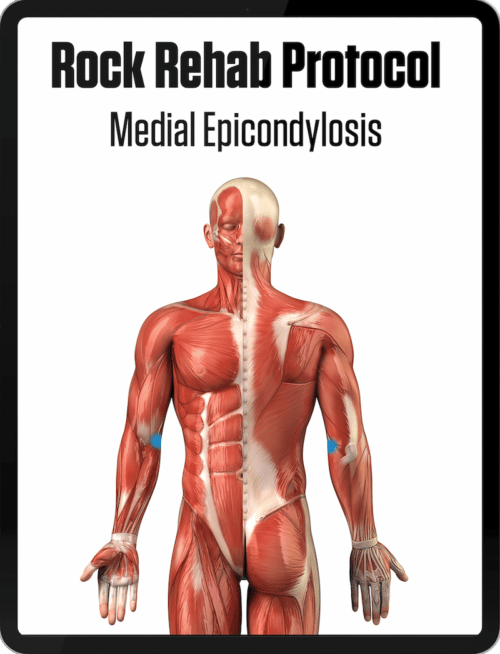 This “Rock Rehab Protocol” is designed to take you step-by-step through the entire rehabilitation process
- Learn how to diagnose your injury with orthopedic tests
- Choose a rehab category based on your test results
- Follow the specific protocol for your rehab category
- Return to climbing at full strength and injury-free
-
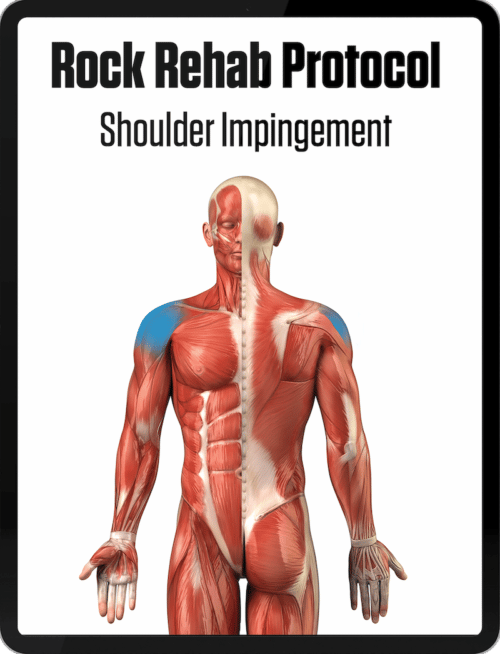 This “Rock Rehab Protocol” is designed to take you step-by-step through the entire rehabilitation process
- Learn how to diagnose your injury with orthopedic tests
- Choose a rehab category based on your test results
- Follow the specific protocol for your rehab category
- Return to climbing at full strength and injury-free
-
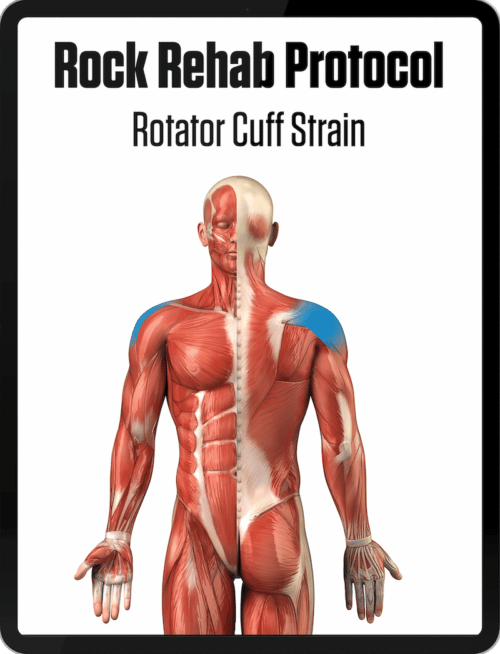 This “Rock Rehab Protocol” is designed to take you step-by-step through the entire rehabilitation process
- Learn how to diagnose your injury with orthopedic tests
- Choose a rehab category based on your test results
- Follow the specific protocol for your rehab category
- Return to climbing at full strength and injury-free
-
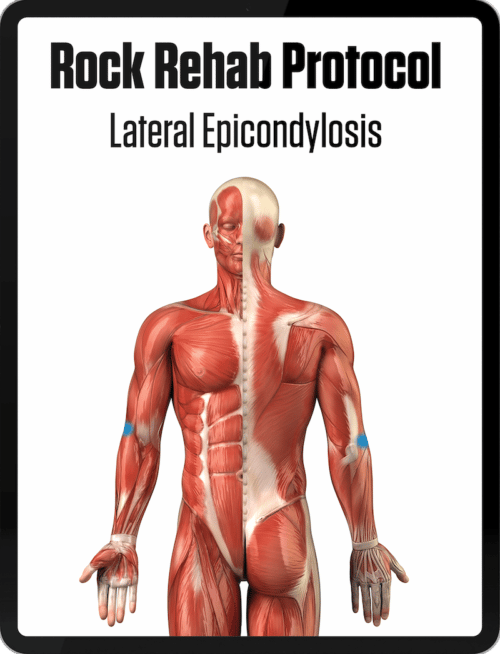 This “Rock Rehab Protocol” is designed to take you step-by-step through the entire rehabilitation process
- Learn how to diagnose your injury with orthopedic tests
- Choose a rehab category based on your test results
- Follow the specific protocol for your rehab category
- Return to climbing at full strength and injury-free
-
 This continuing education course is designed to teach medical providers clinical and laboratory skills necessary to assess and effectively treat upper extremity rock climbing injuries. The course covers the epidemiology of common climbing upper extremity injuries, orthopedic assessment techniques, and diagnostic ultrasound theory and application. It is a laboratory based course with an emphasis on improving the clinical assessment of shoulder, elbow, wrist, hand and finger injuries with ultrasound. Upon completion, attendees will have introductory skills and knowledge to help integrate real-time ultrasound into their management of upper extremity injuries in rock climbers and other athletes.
 -
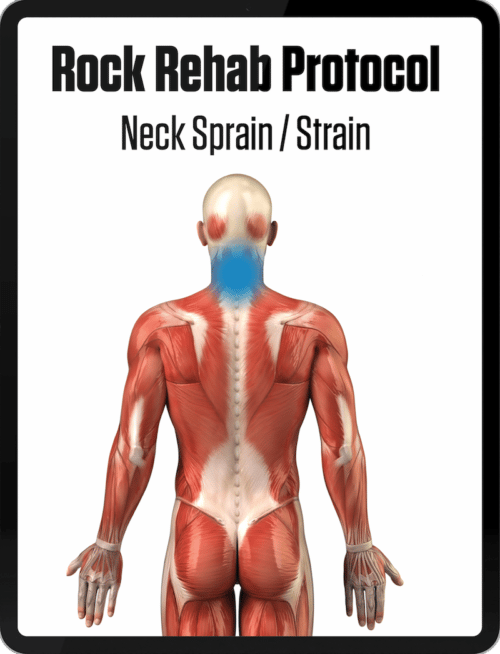 This “Rock Rehab Protocol” is designed to take you step-by-step through the entire rehabilitation process
- Learn how to diagnose your injury with orthopedic tests
- Choose a rehab category based on your test results
- Follow the specific protocol for your rehab category
- Return to climbing at full strength and injury-free
-
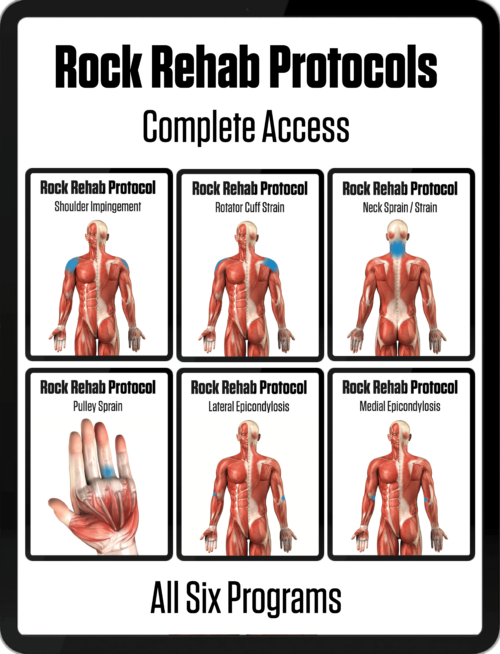 Complete access to all 6 Rock Rehab Protocols
- Medial Epicondylosis
- Lateral Epicondylosis
- Pulley Sprain
- Rotator Cuff Strain
- Shoulder Impingement
- Neck Strain / Sprain
-
 This level 2 continuing education course is for clinicians to gain confidence in assessing, diagnosing and treating rock climbing finger injuries with diagnostic ultrasound. You will again access to the level 1 online course that includes 3 hours of pre-recorded lectures, associated articles, and learning assessments. You will then meet for a 4 hour live session to problem solve rock climbing patient cases with realtime ultrasound demonstrations and will discuss your patient images with an certified ultrasound expert. It is recommended that you have access to an ultrasound unit before taking this course.
 -
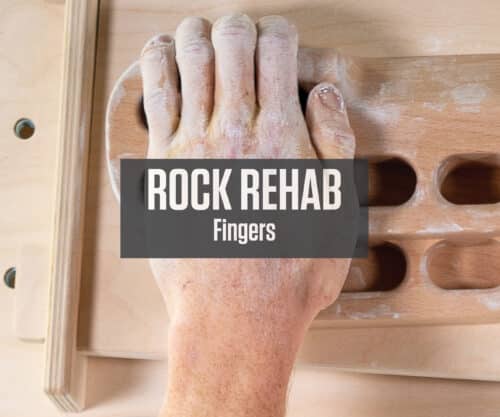 This continuing education course is for medical professionals and coaches looking to advance their knowledge in assessing, diagnosing and treating finger injuries with rock climbers. The material is highly interactive with an emphasis on case based learning and practical application. At the conclusion of the course, you will have a greater understanding of how to assess and rehabilitate rock climbing finger injuries.*Course fees do not include tax and/or VAT. Additional taxes will be calculated separately at checkout based on your geographic location.
 -
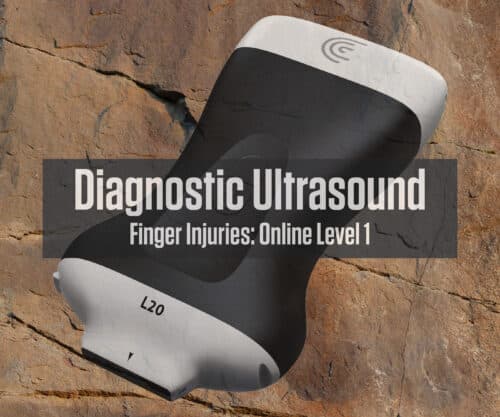 This introductory course is for clinicians looking to learn how to assess, diagnose and treat climbing finger injuries with diagnostic ultrasound. You will access and view 160 minutes of pre-recorded lectures, read associated articles, and problem solve climbing patient cases with ultrasound assessments. At the conclusion of the course, you will have a greater understanding of how to use ultrasound to diagnose climber finger injuries. *Course fees do not include tax and/or VAT. Additional taxes will be calculated separately at checkout based on your geographic location.
 -
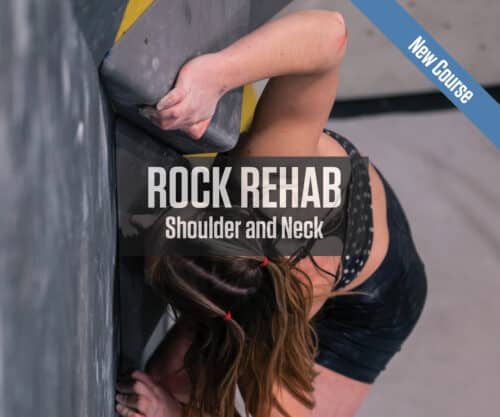 This continuing education course is for medical professionals and coaches looking to advance their knowledge in assessing, diagnosing and treating finger injuries with rock climbers. The material is highly interactive with an emphasis on case based learning and practical application. At the conclusion of the course, you will have a greater understanding of how to assess and rehabilitate rock climbing finger injuries.
 -
 CLEVO Fingerbloc Mini portable hangboard
- Set of 2 compact hangboards with multiple grip options
- Rope suspension for use anywhere — home, outdoors, or on the go
- Can be loaded with additional weights via rod suspension for progressive training
- Load capacity: 150 kg
- Dimensions: 10.5 x 14.3 x 4.5 cm per block
- Material: Skin-friendly beech wood
-
 CLEVO Fingerboard Flex
- Two rows of grips for varied, progressive finger strength training
- Rope suspension for flexible use indoors and outdoors
- Can also be mounted directly onto CLEVO wooden boards
- Load capacity: 150 kg
- Dimensions: 52 x 9 x 3 cm
- Material: Beech wood with skin-friendly surface
-
 CLEVO L: Ceiling mount campus board, climbing handles and pull-up bar
- 15° campus board angle for progressive strength training
- Multifunctional: campus bars, climbing holds, and pull-up bar in one module
- Expandable with lapis balls, campus rungs, and climbing accessories
- Load capacity: 110 kg
- Recommended ceiling height: 2.5–3.1 m
- Material: Beech wood and powder-coated steel
-
 CLEVO DOOR: Doorway Hangboard Pull-up Bar For Fingerboard and Climbing Gear
- Screwless attachment to door frame — no drilling required
- Installs and removes in seconds
- Compatible with hangboards, climbing holds, and accessories
- Load capacity: 130 kg
- Door width: 70–92 cm
- Material: Beech wood and powder-coated steel
-

- Doorframe, Wall, and Ceiling Climbing Modules
- Hangboards and Fingerboards
- Campus Boards and Campus Rungs
- Pull-up Bars and Gymnastics Equipment
- Climbing Holds and Training Accessories
- 5-Year Guarantee and 30-Day Money-Back Policy on Selected Products