Training With Limited Time
You finally do it, you book a week long trip to the most scenic outdoor place you read about in one of Jimmy Chin’s instagram posts. You drop a non-refundable deposit to help motivate a stepped up training plan and get to work on booking out climbing partners for the next two months before your trip to train. As you confirm travel plans and packing lists you suddenly get an email from your boss requiring more time at the office for a special project right in the exact time slot before your trip. Your plan of 4 days a week of 3 hour training sessions just evaporated to 1-2 hour sessions 2x times a week. Now what? First off, if you only climb outside, find yourself a gym close to work or home.
The good news is that the research is actually on your side if you plan your training sessions well. Maintaining the strength and conditioning you already have is possible with both a 1x or a 2x a week workout regime that focuses on giving effort in the capacity of a 6-8RM style workout in a 4 sets per 1 day workout or 2 sets across a two day schedule per week.1 Converting weight training research to climbing workout effort isn’t an exact science but essentially you’d want to focus on climbing more consecutive climbs in a full session while making sure the moves in your routes are hard enough to get the benefit of the session while taking less rest between each individual climb. It’s comparing your highest effort, maybe the hardest graded route you can climb cleanly in a session with longer periods of rest in between in an hour, compared to doing 12-15 of mid-range effort climbs in that hour without stopping or falling, and taking 30 seconds to a minute only of rest between climbs. Your Rate of Perceived Exertion (RPE) should be 12-13 on the Borg scale. In other words moderate to somewhat hard is a good midrange to aim for.
At my gym in New York City we have 9 autobelay devices that each have 2-3 different routes, usually an easy (5.6-10.a), medium (5.10b- 5.11b) to hard (5.11c-5.12b). Autobelay’s are great if the gym has them because you can just clip in and do them on your own. You can get a lot of mileage in, in half the time simply because you aren’t reciprocal belaying your partner. The walls are shorter for these routes at about 30’ but if you do all of them that’s 810’ and if your strength and endurance is already up it takes only 25-35 mins back to back. There are several combinations possible, but just to give an example I illustrated an easy, medium, and hard workout. The easiest is to just do all the routes in a row starting either with the hard or finishing with the hard, depending on where my endurance is at and how much pump my forearms can handle. Resting in a one arm hang position is another good way to conserve energy, but we’ll save that for another article. Medium would be eliminating the easiest and doubling up on the medium or hard. Hard is doing the hardest route in each “pod”. Obviously the combinations are endless, it’s choose your own adventure based on your energy that day. As a warmup I’ll usually run 10b and easier back to back which is about 500’. I can put in the warmup and all the routes in the easy workout in about 45 mins. That’s about 1400’ in 45 minutes and leaves some time to do weights or the campus ladder which I’ll explain later.
Meg’s Autobelay Pod Workout
Easy
| Route 1 | Route 2 | Route 3 | Route 4 | Route 5 | Route 6 | Route 7 | Route 8 | Route 9 |
|---|---|---|---|---|---|---|---|---|
| 5.6 | 5.7 (2x) | 5.6 | 5.10b (2x) | 5.7 | 5.6 | 5.8 | 5.7 | 5.6 |
| 5.8 | 5.9 | 5.10b | 5.11a | 5.9 | 5.8 | 5.9 | 5.9 | 5.10b |
| 5.10a | 5.11c | 5.11d | 5.10b | 5.11a | 5.11c | 5.12a |
Medium
| Route 1 | Route 2 | Route 3 | Route 4 | Route 5 | Route 6 | Route 7 | Route 8 | Route 9 |
|---|---|---|---|---|---|---|---|---|
| 5.6 | 5.7 | 5.6 | 5.10b | 5.7 | 5.6 | 5.8 | 5.7 | 5.6 |
| 5.8 | 5.9 (3x) | 5.10b | 5.11a (3x) | 5.9 | 5.8 | 5.9 | 5.9 | 5.10b |
| 5.10a (2x) | 5.11c (2x) | 5.11d (2x) | 5.10b (2x) | 5.11a (2x) | 5.11c (2x) | 5.12a (2x) |
Hard
| Route 1 | Route 2 | Route 3 | Route 4 | Route 5 | Route 6 | Route 7 | Route 8 | Route 9 |
|---|---|---|---|---|---|---|---|---|
| 5.6 | 5.7 | 5.6 | 5.10b | 5.7 | 5.6 | 5.8 | 5.7 | 5.6 |
| 5.8 | 5.9 (3x) | 5.10b | 5.11a (3x) | 5.9 | 5.8 | 5.9 | 5.9 | 5.10b |
| 5.10a (3x) | 5.11c (3x) | 5.11d (3x) | 5.10b (3x) | 5.11a (3x) | 5.11c (3x) | 5.12a (3x) |
Workouts can be divided into weight training and time on the wall whether that’s back to back climbs with minimal rest on rope routes or sets of 4x4s on bouldering walls. (If your gym doesn’t have auto-belays you may need a dedicated belayer who gives you an hour or two of their time just feeding you rope). The idea is that you’re putting in high-midrange effort on your end. Grade-wise for me that’s doing sets of 4x4s on V3s if I’m bouldering, or 11s on the auto belay routes. Pick routes that you are able to flash.
Routes and numbers of time to do the routes depend on your technical skill, endurance and strength. Obviously, if you’re a seasoned climber, regularly projecting 12s/13s in the gym, the grades you pick to train on for your 1-2 hours of training are going to be higher than the more advanced beginner who has been climbing for a year and regularly projects 10s and 11s in the gym. This is where you have to decide for yourself what you are capable of climbing in your allotted time frame. Again, aim for high midrange effort. In the above example the seasoned climber might spend 1 hour doing 11c’s-12a’s 15-20 routes on 30’ walls with 30 sec-1 min rest between each route. The advanced beginner might work on 5.7’s-10a’s in the same parameters, perhaps with 1-1.5 mins of rest. Do what you can in your allotted time frame and adjust from there. If you pump out early, decrease the grades of the routes. The climbing should feel hard but not to failure.
It’s a good idea to also infuse some mobility and antagonist training into this to keep flexible and reduce the risk of injury. With limited time, warmups can be multi-tasked as the commute to the gym. If you live within walking or biking distance, ride or take a brisk walk to the gym to get the body warm and heart rate up. If driving is your only option, drop the grades down as low as possible and start with smaller sets, slower movements on easy routes.2 Mobility training can use up a lot of gym time, so even if there’s 3-5 mins a day that can be spent on mobility at home or while your camera is off during a zoom meeting, it helps. Every day you can pick a different part of the body that greatly affects our ability on the wall. Prioritize hips3, rotator cuffs, wrists, and fingers– which of course brings up fingerboard training.
Finger strength is hugely important next to the immediate benefits of a strong core and shoulders. Stein et. al. reported that finger strength was prioritized over rate of force development (RFD) and dead-hang duration in the main analysis. Finger strength was prioritized because 1) this was the most reported outcome in the included studies and 2) has been identified as a crucial determinant of climbing performance.4 Some colleagues have said to only fingerboard train after a year of climbing and some say anyone can start a fingerboard regime, my advice is to, again, self assess. Hanging on tiny credit card width crimps and trying to pull up multiple times is probably not a great idea if you’re more of a beginner. There are a myriad of apps available now with all kinds of suggested workouts, some of which offer a very smart sub max fingerboard training. That means that you’ll hang on progressively thinner holds on the fingerboard device with only partial body weight. Several of my climbing partners have incorporated the sub max routine as a finger warmup before working on their project routes. They’ve found it beneficial to reduce injuries and strains while repetitively pulling on challenging holds.
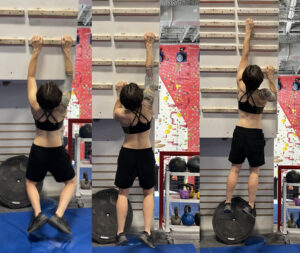
A campus board ladder is another great way to train power and fingers at the same time. It can be found in most climbing gyms and can help with power endurance and contact strength. If your hands are already warmed up post wall climb a quick set of 4 reps on the campus ladder can be very beneficial to the level of power endurance you can exert when moving toward farther holds that are more complicated than jugs to hold on to.5 Boulderers get this more in the movement style of their routes but big consecutive dynamic movement might not be as prevalent on rope routes. Various ladder workouts can be found again on apps or youtube but to start you can use alternating hands to move up. Starting from a hang position, use the right or left hand alternating each rung, if you start on rung 1, and move with the left you’d go to rung 2, then with the right rung 3 and then the left rung 4 and so on. As that becomes easier you can go every other. Starting from hanging position on rung 1, move the right up to rung 3, then the left up to rung 5 and the right up to rung 7 and so on. If both of those are too easy, skip 2 rungs and so on. The idea here is that you’ll increase your ability to pull up and grab farther and farther rungs. It takes quite a bit of power endurance to pull up with uneven hands, the higher the opposite hand reaching up the closer it will feel like doing a one armed pull up. If you don’t have access to a campus board ladder, get a pullup bar you can hang in a doorway or find one at the local park. Sets of pull ups, dead hangs and bent arm hangs are also tremendously beneficial.6 Sample illustration below of a climber using a campus ladder.

Antagonist training will keep a bit of balance to the muscles that are pulling us in one way. Over time, those muscles start to pull our skeleton out of balance and the muscles opposite can become overstretched and weak. Some of my favorite antagonist training I’ve found in Eric J. Horst’s book “Training for Climbing”. He states, “The ubiquity of injured climbers is evidence of the prevalence of over-enthusiastic training, climbing too much (with too few rest days), and a failure to properly train arm and shoulder mobility and stability before engaging in high-end climbing and advanced climbing-specific training (finger and campus board). While certainly not a 100 percent preventative of injury, embracing the concept of “stability before strength, and strength before power” will vastly lower your injury risk and enable you to engage in a progressively more rigorous training program with each passing year.” I believe this advice to be especially true if you are an older climber (over 40) and if you have less time to train. Sometimes the allure of pushing too hard without the time to train properly can lead to injury, so if time is limited, train wisely. Worse than not having time to climb is not climbing because of an injury that could have been prevented.
So what to prioritize off the wall? Reverse wrist curls, scapular pushups and pullups, dumbbell internal and external rotation for scapular stability, wrist pronators, T’s and Y’s for the mid and low traps, shoulder press and pushups. If time doesn’t permit at the rock gym, it’s fairly easy to get some dumbbells and squeeze these in at home in one or two of these per day, over the course of the 7 day week.
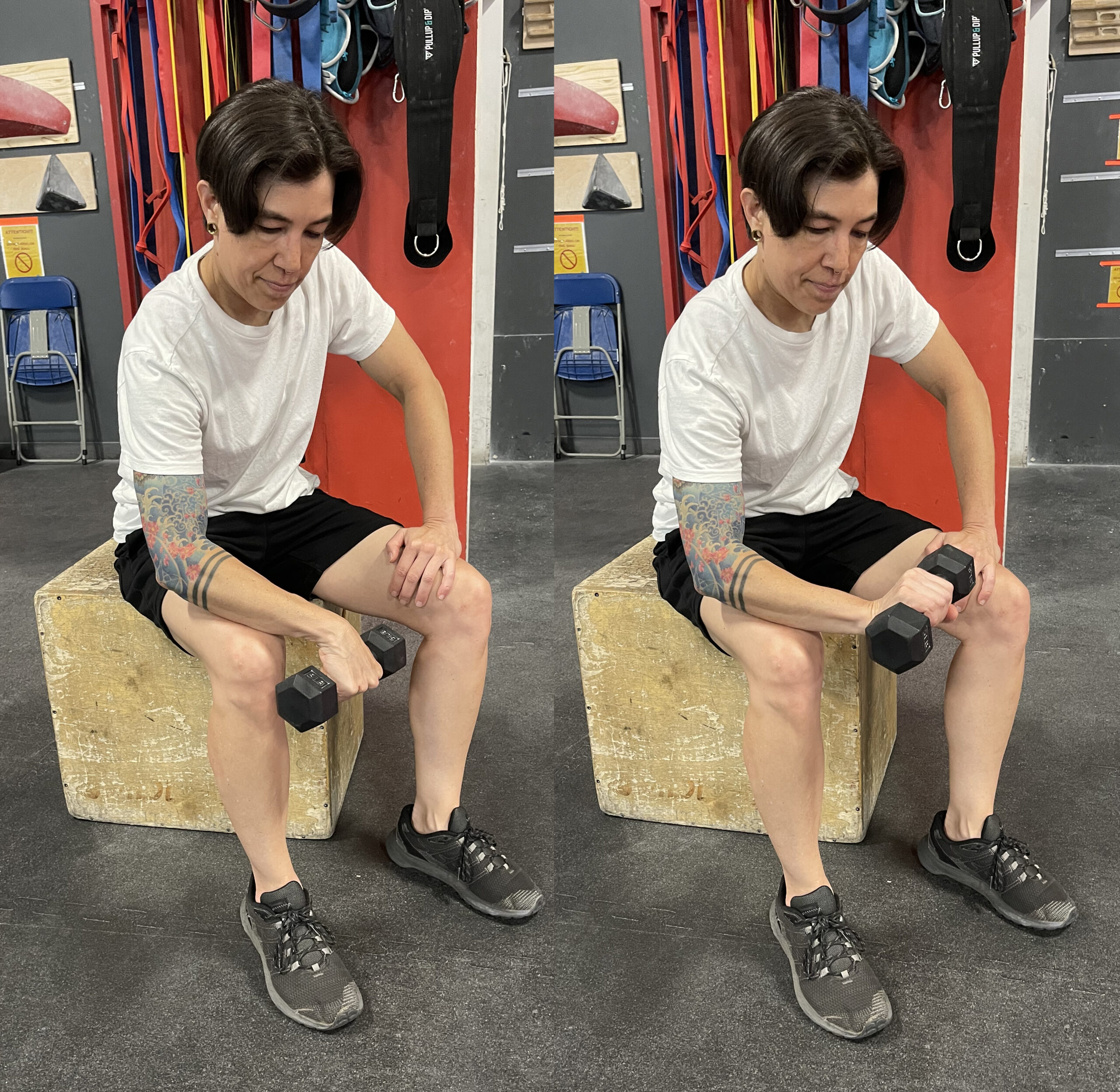
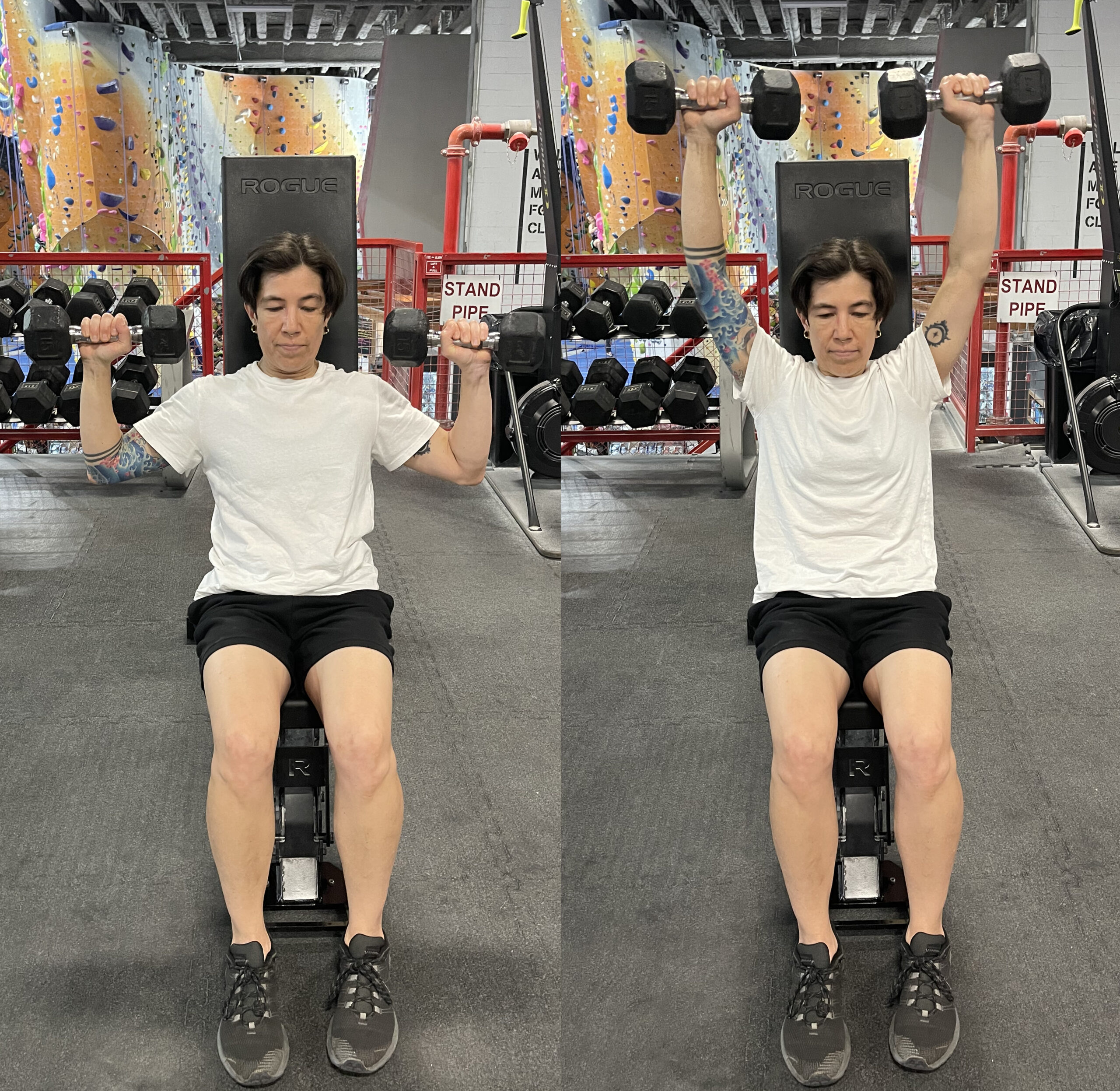
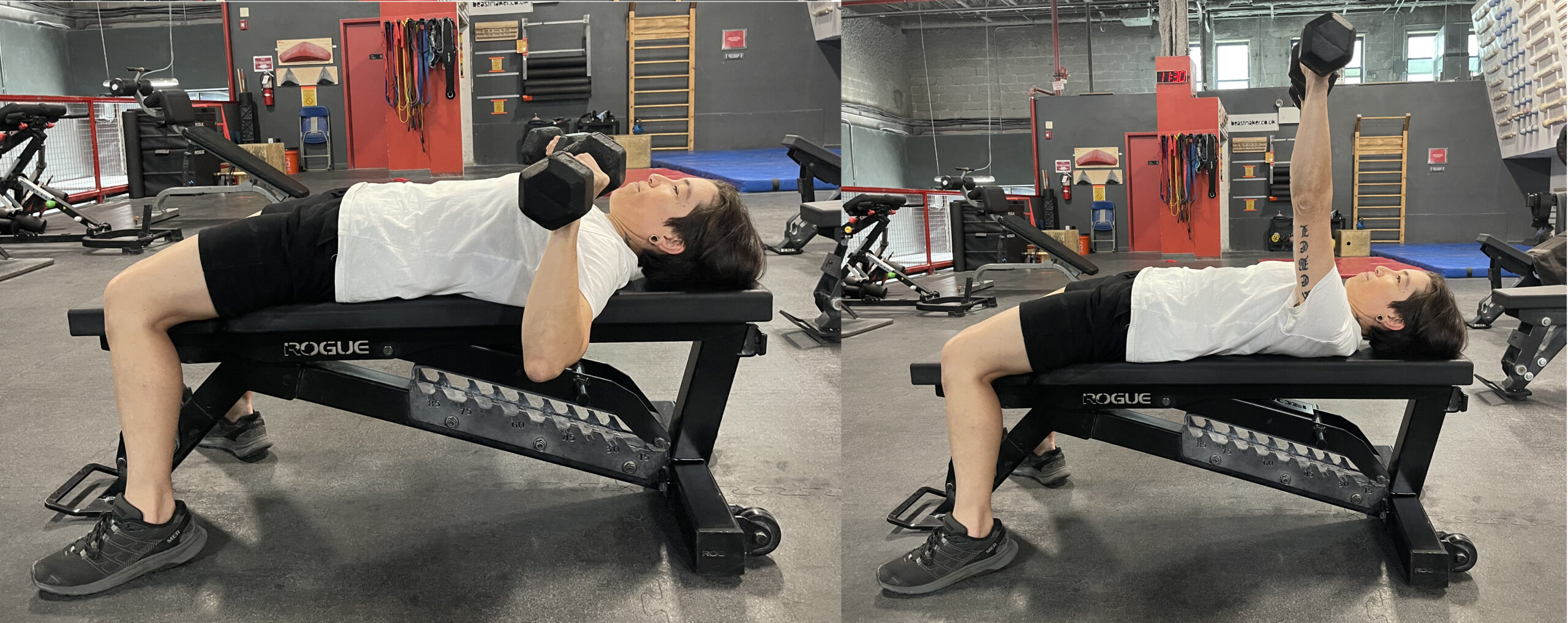
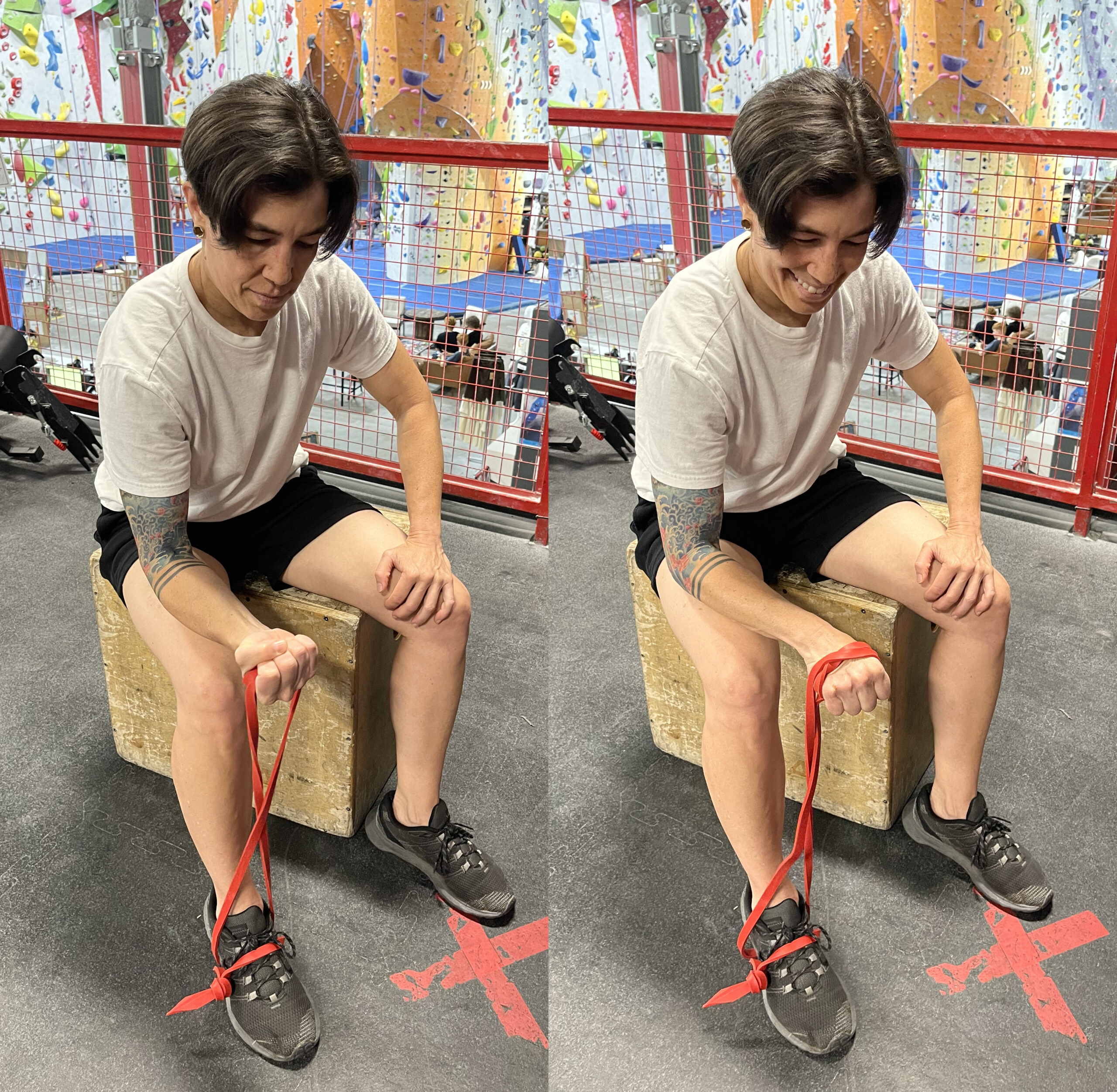
For me personally I’ve had to cut rock climbing wall time workouts back due to prioritizing PTA school and clinical rounds as I finish up the program. I’ve spent the last 2 years doing as much as I can with less workout time and have found that this has helped maintain as much climbing strength and ability as possible. Naturally over the course of two years some strength has slipped but with more focus I also went from a 12a being the highest grade I led indoors to a 12d. Some of that had to do with repeating that 12d route over and over on top rope for 2 weeks till I got the beta down clean. I then spent 2 weeks climbing it over and over on lead until I could redpoint it. I had 8 years of climbing technique guiding my movement, so I wasn’t exactly a beginner but the point being that limited time doesn’t have to end your climbing practice. It’s more fun and relaxed to go to the gym with 3-4 hours to spare and visit with friends and lollygag and make huge progress, but it’s not impossible to maintain strength and progress if that time gets sacrificed to other life responsibilities.
Another great way to ensure your climbing focus stays on trips and sending hard routes is to check in with a Doctor of Physical Therapist immediately if you start any intense training or feel pain or injury from going too hard. An experienced PT can work with you to make sure your movements are activated by the right muscles instead of compensations that might cause harm over time. PT’s can guide you with exercises to increase flexibility and strength and keep the body functioning smoothly and with good form. A google search for DPTs in your area is a good place to start, as well as asking fellow climbers for a PT that focuses specifically on climbing injuries.

Author Bio
Meg Allen is a Licensed PTA and has been climbing since 2016. She taught indoor rope climbing skills and technique at The Cliffs (now Movement Gyms) in New York City for 4 years before recently returning to her home state of California. She graduated with honors from the PTA program at LAGCC in New York City in June of 2025 and is currently practicing in Acute Care in Northern California. Now that she’s done with school she plans to hone her outdoor skills in her free time and explore as many west coast classics as possible.
The Research
- Tavares, L. D., de Souza, E. O., Ugrinowitsch, C., Laurentino, G. C., Roschel, H., Aihara, A. Y., Cardoso, F. N., & Tricoli, V. (2017). Effects of different strength training frequencies during reduced training period on strength and muscle cross-sectional area. European journal of sport science, 17(6), 665–672. https://doi.org/10.1080/17461391.2017.1298673
- Iversen, V. M., Norum, M., Schoenfeld, B. J., & Fimland, M. S. (2021). No Time to Lift? Designing Time-Efficient Training Programs for Strength and Hypertrophy: A Narrative Review. Sports medicine (Auckland, N.Z.), 51(10), 2079–2095. https://doi.org/10.1007/s40279-021-01490-1
- Draga, P., Ozimek, M., Krawczyk, M., Rokowski, R., Nowakowska, M., Ochwat, P., Jurczak, A., & Stanula, A. (2020). Importance and Diagnosis of Flexibility Preparation of Male Sport Climbers. International journal of environmental research and public health, 17(7), 2512. https://doi.org/10.3390/ijerph17072512
- Stien, N., Riiser, A., P. Shaw, M., Saeterbakken, A., & Andersen, V. (2023). Effects of climbing- and resistance-training on climbing-specific performance: a systematic review and meta-analysis. Biology of Sport, 40(1), 179-191. https://doi.org/10.5114/biolsport.2023.113295
- Saeterbakken, A. H., Stien, N., Pedersen, H., Langer, K., Scott, S., Michailov, M. L., Gronhaug, G., Baláš, J., Solstad, T. E. J., & Andersen, V. (2024). The connection between resistance training, climbing performance, and injury prevention. Sports Medicine – Open, 10(1). https://doi.org/10.1186/s40798-024-00677-w
- Hörst, E. J. (2016). Training for climbing: The Definitive Guide to Improving Your Performance. Falcon Press Publishing.
- Disclaimer – The content here is designed for information & education purposes only and the content is not intended for medical advice.
Related Posts