Hangboarding: Risk vs. Reward
On Hangboarding
Note for reader:
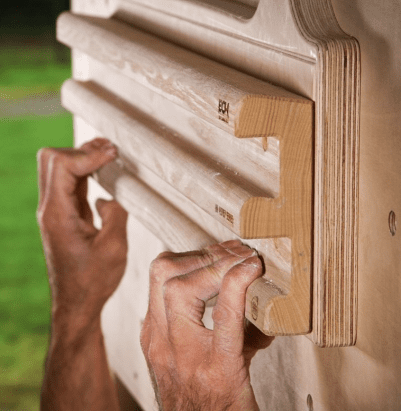
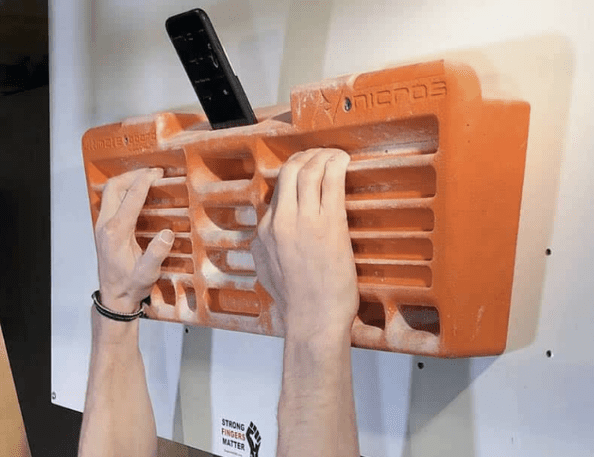
Hangboarding is a training method in which climbers hang from their fingers on certain grips (often arranged on a piece of equipment called a hangboard) in an attempt to progressively increase their finger strength.1
Hangboarding: Yes or No?
The question commonly enters the minds of many ambitious climbers who wish to do all they can to climb harder. And wouldn’t it be nice if we could just answer it and get back to training. But such clear and simple answers rarely exist in this world of uncertainty. To investigate further, we need to consider hangboarding in regard to injury, strength, and level of experience.
This article is not meant to be prescriptive, but to instead provide information to help guide your decision-making when forming a training program for yourself. But for those who are looking for more specific guidance, here are my recommendations:
- Strong climbers with extensive experience (6+ years) should hangboard, due to the high likelihood of increased finger strength and the potential for reduced injury risk.
- Novice climbers should approach hangboarding cautiously, due to the potential for increased injury risk, and some uncertainty on the optimal strategy for improving finger strength in this group.
- Strong climbers with low to moderate experience (<6 years) should make informed training decisions based on their goals and the risks involved.
Please note that these recommendations will not apply to everyone. They are based on average training responses and some correlational data, but each individual will likely respond differently to hangboarding, regardless of their experience level. Furthermore, these recommendations are specifically for climbers with the goal of improving their bouldering and sport climbing ability, rather than other valid climbing goals (such as having fun and decompressing). To understand my reasoning behind these recommendations, read on.
Disclaimer: Your training is your responsibility. If this post influences you to try hangboarding, and you injure yourself, that is a consequence of your own making. Do not place too much trust in one person’s interpretation of a limited body of research.
On injury:
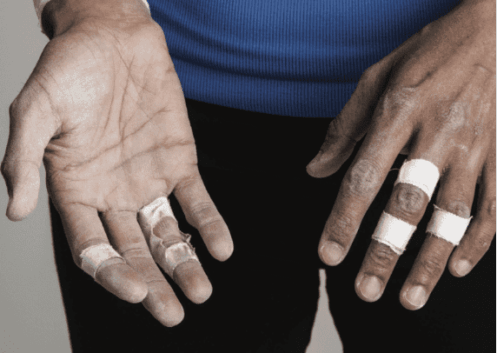
Finger injuries are the most common injuries among climbers.2 Regarding injury risk, arguments have been made both in support of and against hangboarding. Hangboarding may strengthen the anatomical structures supporting the fingers (tendons, ligaments, pulleys) to reduce injury risk. In support of this idea, strength training has been shown to reduce injury risk in non-climbing sports.3 At the same time, hangboarding in and of itself may overload the fingers in such a way that it increases the risk of injury.3,4
Climbing-specific research on this topic is limited, making it difficult to come to conclusions. However, a 2023 survey provides some insight on this question. 434 Finnish climbers of various abilities and experience levels were asked about their training and injury experience. When considering only those with at least 6 years of climbing experience, finger injury was less common among those that had been hangboarding. Conversely, when considering only male climbers with less than 6 years of experience but whose performance was at least 7a on the Font scale (V6 on the V-scale), finger injury was more common among those that had been hangboarding.3
Unfortunately, this survey leaves us to speculate on a substantial portion of the climbing community (non-male climbers with less than 6 years of experience, and anyone who climbs below V6). But the survey does allow us a potential interpretation: perhaps climbers with many years of experience have adapted their fingers to the point where hangboarding is not only safe but preventative against injury. Meanwhile, strong but inexperienced climbers may not have sufficiently strengthened the anatomical structures supporting their fingers to withstand the loads they can create on the hangboard.
Of note, this survey does not tell us the training methodology these climbers used when hangboarding. For example, an increased injury rate among some hangboarders could have been due to progressing too much, too fast. Furthermore, we cannot assume that hangboarding caused injury in these climbers. Perhaps the hangboard was used as a rehab tool for past injuries, or relentless ambition drove some climbers toward both hangboarding and taking too many attempts on their projects. The possible explanations go on.
Despite their limitations, these findings are the basis for my recommendation that experienced climbers (6+ years) should hangboard, and that novice climbers (<6 years) should approach hangboarding cautiously.
But approaching hangboarding cautiously does not necessarily mean avoiding it altogether. It is possible that, given a slow, conservative, and consistent progression, novices may safely perform hangboard training. In fact, it has been found that climbers can increase their finger strength by completing repetitive hangs at only 40% of their maximum load.4 This increases the likelihood that safe but effective hangboard protocols could exist for novices.
It should be noted, however, that finger injuries often occur without warning, making it hard to anticipate the appropriate progression.1 A decision to start hangboarding should be done with a full acknowledgement of the risks (see above for disclaimer).
On finger strength:
To climb hard, it helps to have strong fingers. Not a super controversial claim, but in case anyone’s skeptical, here are some numbers: among 205 sport climbers ranging from less than 1 to more than 9 years of experience, the time someone could hang on a 25-mm rung explained 70% of their climbing performance.5 Among 78 male intermediate to elite climbers, climbing performance was correlated with the peak force (73%), average force (77%), and rate of force development (64%) that the climber could generate on a 23-mm rung.6 And in a study of 30 advanced sport climbers that compared the relative contribution of physical, technical, and mental factors to performance, finger strength was the single most important factor.7
What is not clear is whether finger strength is still the most important factor for climbing performance among novices–the above studies, when they did include novices, did not analyze them separately from the advanced climbers. So it remains possible that for novices, some other factor (such as technique) is more important for climbing performance. But perhaps we can assume that the novice climber will become an advanced climber, at which point finger strength could become a crucial factor for their performance.
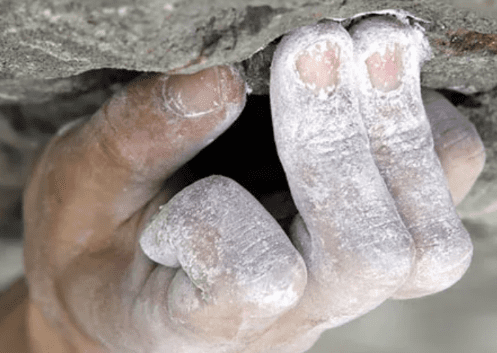
Regardless, considering the importance of finger strength, the question arises: does hangboarding actually build finger strength more than just climbing would? In short, yes–at least for intermediate to advanced climbers, and competitive boulderers–the groups that tend to be included in studies on hangboarding. In at least 5 of these studies, a 4 to 10 week hangboarding protocol increased finger strength (determined by measures such as maximum force, rate of force development, and maximum hang time) more effectively than just climbing.8, 9, 10, 11, 12
The effectiveness of hangboarding in improving finger strength–which is crucial for climbing performance–contributes to my recommendation that experienced climbers (6+ years) include hangboarding as one component of their overall training program. But we are still left with a difficult question: does hangboarding increase actual climbing performance more than climbing alone? After all, despite the importance of finger strength, it is not the only contributor to climbing performance. Could a climber’s limited time and energy be better spent by focusing solely on climbing itself, which is arguably more effective at training other aspects such as technical and mental components? Unfortunately, it seems that the available studies on hangboarding did not assess its effect on actual climbing performance–only on finger strength. Furthermore, certain climbing styles may challenge finger strength more than others–for instance, it is unknown whether climbing on the moon board or tension board could increase finger strength as effectively as hangboarding. Ultimately, we must prioritize our own training methods based on what we determine to be the most valuable use of our time and energy.
The lack of novices included in these studies on hangboarding contributes to my recommendation that novices approach hangboarding cautiously–not only could hangboarding potentially increase injury risk, but there is not sufficient evidence to conclude that hangboarding is the optimal strategy for increasing finger strength among novice climbers. For instance, it is still possible that novice climbers could improve their finger strength just as effectively through climbing alone.
A tough choice for strong climbers with less than 6 years of experience:
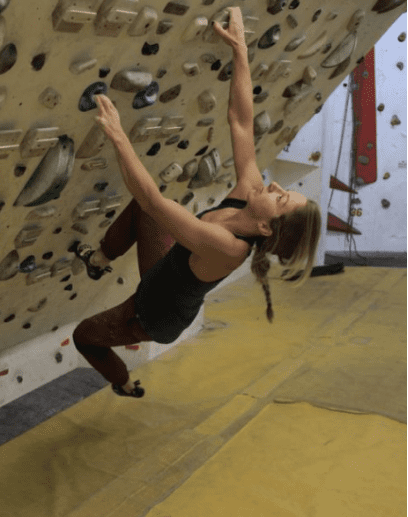
If you climb at least V6 and have been climbing fewer than 6 years, you are left with the following ideas: that hangboarding could potentially increase your risk of injury (let’s assume this holds true for non-male climbers as well, in the interest of caution), and that hangboarding is likely to increase your finger strength. Is the increase in finger strength worth the risk of injury? Only you can decide. This is why, rather than providing a more specific recommendation, I can only advise that you make informed training decisions based on your goals and your understanding of the risks involved.
In closing:
Hopefully you now have some more tools you can use to make informed training decisions. If you find yourself questioning yourself, fear not–like climbing itself, developing your training regimen can be a challenging process consisting of risk analysis and experimentation. Armed with the acceptance of uncertainty, you can more confidently venture into the unknown. Happy Climbing!
Author Bio:
Ezra David is a Physical Therapy Student and a climber with 13 years of experience. He enjoys investigating questions on physical function with the nuance they require.
References:
- Eggengoor A. Sports interaction technology for training load management and injury prevention: a case study on hangboard training. 2022. https://essay.utwente.nl/93274/1/Eggengoor_MA_EEMCS.pdf
- Grønhaug G. Self-reported chronic injuries in climbing: who gets injured when? BMJ Open Sport & Exercise Medicine. 2018;4:e000406. https://bmjopensem.bmj.com/content/4/1/e000406
- Sjöman AE, Grønhaug G, Julin MV. A Finger in the Game: Sport-Specific Finger Strength Training and Onset of Injury. Wilderness & Environmental Medicine. 2023;34(4):435-441. https://journals.sagepub.com/doi/10.1016/j.wem.2023.06.004
- Gilmore NK, Klimek P, Abrahamsson E, Baar K. Effects of Different Loading Programs on Finger Strength in Rock Climbers. Sports Med Open. 2024;10(1):125. https://pmc.ncbi.nlm.nih.gov/articles/PMC11576708/
- Baláš J, Pecha O, Martin AJ, Cochrane D. Hand–arm strength and endurance as predictors of climbing performance. European Journal of Sport Science. 2012;12:16-25. https://onlinelibrary.wiley.com/doi/10.1080/17461391.2010.546431
- Vereide V, Andersen V, Hermans E, Kalland J, Saeterbakken AH, Stien N. Differences in Upper-Body Peak Force and Rate of Force Development in Male Intermediate, Advanced, and Elite Sport Climbers. Front. Sports Act. Living. 2022;4:888061. https://www.frontiersin.org/journals/sports-and-active-living/articles/10.3389/fspor.2022.888061/full
- Magiera A, Roczniok R, Maszczyk A, Czuba M, Kantyka J, Kurek P. The structure of performance of a sport rock climber. J Hum Kinet. 2013;36:107-17. https://pmc.ncbi.nlm.nih.gov/articles/PMC3661882/
- Levernier G, Laffaye G. Four Weeks of Finger Grip Training Increases the Rate of Force Development and the Maximal Force in Elite and Top World-Ranking Climbers. Journal of Strength and Conditioning Research. 2019;33(9):2471-2480. https://journals.lww.com/nsca-jscr/fulltext/2019/09000/four_weeks_of_finger_grip_training_increases_the.20.aspx
- Medernach, Jerry P.J.1; Kleinöder, Heinz2; Lötzerich, Helmut H.H.3. Fingerboard in Competitive Bouldering: Training Effects on Grip Strength and Endurance. Journal of Strength and Conditioning Research 29(8):p 2286-2295, August 2015. https://journals.lww.com/nsca-jscr/fulltext/2015/08000/fingerboard_in_competitive_bouldering__training.26.aspx
- Hermans E, Saeterbakken AH, Vereide V, Nord ISO, Stien N and Andersen V (2022) The Effects of 10 Weeks Hangboard Training on Climbing Specific Maximal Strength, Explosive Strength, and Finger Endurance. Front. Sports Act. Living 4:888158. doi: 10.3389/fspor.2022.888158 https://www.frontiersin.org/journals/sports-and-active-living/articles/10.3389/fspor.2022.888158/full
- Mundry, S., Steinmetz, G., Atkinson, E.J. et al. Hangboard training in advanced climbers: A randomized controlled trial. Sci Rep 11, 13530 (2021). https://www.nature.com/articles/s41598-021-92898-2
- Levernier, Guillaume1,2; Laffaye, Guillaume1,2. Four Weeks of Finger Grip Training Increases the Rate of Force Development and the Maximal Force in Elite and Top World-Ranking Climbers. Journal of Strength and Conditioning Research 33(9):p 2471-2480, September 2019. https://journals.lww.com/nsca-jscr/fulltext/2019/09000/four_weeks_of_finger_grip_training_increases_the.20.aspx#:~:text=Therefore%2C%20a%204%2Dweek%20training,on%20the%20absolute%20RFD%2095%25.
- Disclaimer – The content here is designed for information & education purposes only and the content is not intended for medical advice.
Related Posts