Jedi Mind Tricks for Recovering from Injury Better, and Faster
Recently in my journey pursuing my doctorate in physical therapy, I’ve explored the idea of “contextual factors in healing”, the unwritten, often underemphasized components of recovery from injury that carry surprising weight. In the setting of physical therapy, contextual factors encapsulate patient beliefs, practitioner beliefs, patient-practitioner relationship, and environment in which we heal. The study of contextual factors in healthcare is an emerging field, and part of a global push toward viewing healing as a biopsychosocial process, an idea that considers the intersection of our bodies and biology, our psychological and mental wellbeing, and the social/environmental factors around us. If optimal load, training volume, biomechanics, etc. are the “hard” aspects of recovery, contextual factors are the “soft” parts of recovery that traditionally don’t get the spotlight they deserve.
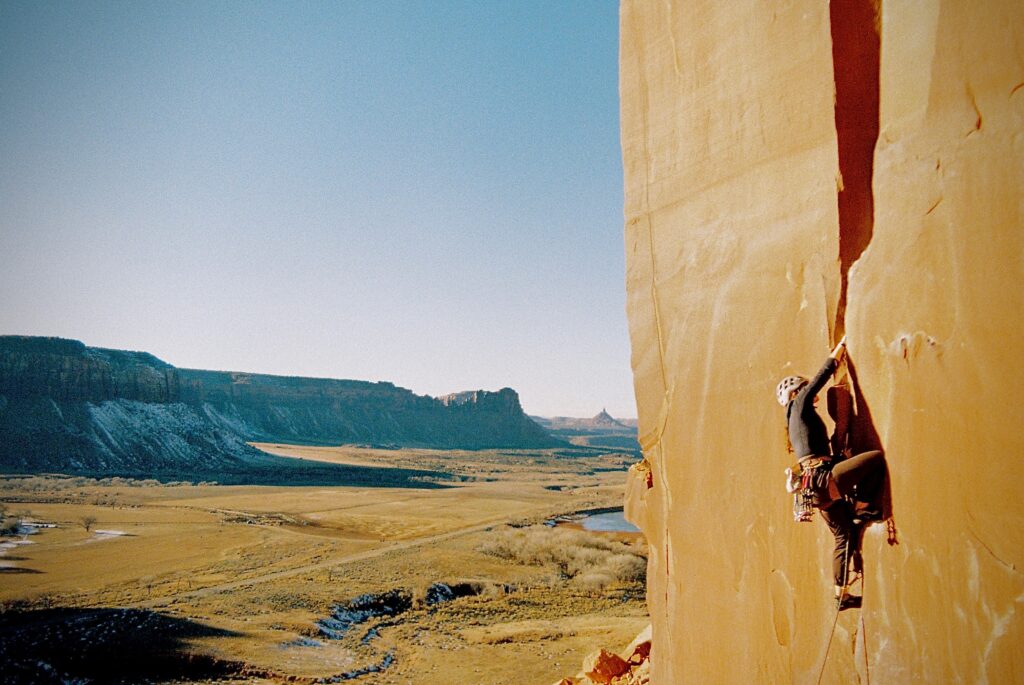
[Amber Barnes gettin’ jiggy with it in Indian Creek, UT. Cierra Coppock]
Recovering from a climbing injury is hard. It can be slow, painful, and isolate you from your community. So, what does this emerging research say about contextual factors and recovering from rock climbing injuries? Unfortunately, not much. However, understanding the ways in which contextual factors have affected less-specific populations and more general musculoskeletal conditions can provide valuable insight into how we can use them to our advantage as rock climbers.

[Maddy Stone showing them who’s boss in Vedauwoo, WY. Jarrid Nakata]
Brendan Leonard (Semi-Rad) recently published a comic regarding the distinction between “uphill people” and “downhill people”. Brendan remarked that climbers (uphill people) “believe a lifelong struggle against gravity is meaningful, or healthy, or something”. Personally, I’d agree with that sentiment, but what does that mean for us as athletes? From what I’ve seen, that means obsessing over goals, deep diving into research on how to break through a plateau, documenting, journaling, and scribing every attempt at a boulder. These are all adaptations we’ve made to be successful, but there are some aspects of this that can work against us as well. As highlighted in an article by Regine Klinger (2017), nocebo is the evil twin of placebo. A deleterious power of our mind that creates true, physiological disability and pain simply based on the belief it exists. The power of nocebo is often overlooked and hides in the shadows, and WebMD isn’t helping. Excessive internet research (without proper prudence) can incite fear, and harmful beliefs about our bodies, especially when we are in vulnerable states of mind following injury. It’s important that as we research, we do so diligently, and we do so with the understanding that much of that information requires advanced degrees to truly utilize in a diagnostic way. I want to be clear though, this is not a recommendation to fall out of well-intentioned and diligent gathering of information, rather just to do so with some degree of skepticism and detaching from the expectation that certain findings indicate certain disability. No, your anterior shoulder pain probably doesn’t mean that you have cancer, or that you need a rotator cuff repair, or will never climb again. It’s a possibility, but if you’re ever in doubt about that, please go see your healthcare provider.

[Adam Ondra mentally rehearsing for Silence, 5.15d. Bernardo Giménez]
The benefits of mental training on climbing performance have been touted by many elite athletes (see Ondra), highlighting the uniquely psychological nature of performance in rock climbing. Recovering from rock climbing injury should be no different in that respect. In the physical therapy world, it has been well-established that pain-catastrophizing beliefs (internal magnification of symptoms, helplessness, negative thoughts, over-rumination, etc.) can increase the amount of disability and pain a patient feels (Vlaeyen 1995). Easier said than done, it would be an easy recommendation to avoid falling into these repetitive feedback loops of negative thoughts. However, the evidence from Wertli (2018) states that while pain catastrophizing often predicts initial disability, recent studies have shown that positive beliefs are more predictive of rehabilitation potential. These negative and positive beliefs are not mutually exclusive, and often coexist, but only positive beliefs is predictive of recovery, after all – it’s not where we came from, but where we’re going that’s important. Positive psychological attributes included self-efficacy, belief that one can cope with their pain, continuing to be physically active, and expecting good outcomes. Additionally, it was found that these traits can be learned. Mindfulness, positive self-talk, and mediation can all be great places to start here. Just to clarify again, a positive mindset is correlated with effective healing – it is not “toxic positivity” (everything MUST be sunshine and rainbows all the time), and it alone will not fix a busted pulley, but it is a valuable ingredient in the healing process. This valuable insight allows us to home in on the aspect of mental training that would be the most beneficial when rehabilitating an injury.

[Chirrut Imwe practicing his mental training on the field of battle, Lucas Films – Rogue One]
As stated before, dealing with a climbing injury is hard. While having a strong sense of optimism and self-efficacy is a powerful way to improve your recovery outcomes, it’s important to seek help when appropriate. Seeing a physical therapist as soon as a possible – or better yet – having an existing relationship with a PT provider that you can reach out to can accelerate the healing process, and relieve some of the burden of recovery. It’s important to find a provider that understands your needs as a rock climber, is willing to learn from you, and hears you out. It turns out that physical therapy excels in treating injury and disability partly due to its inherently relational characteristic. Research done by Fuentes et.al. has shown that improved patient-practitioner relationship can decrease patient-reported pain intensity, and disability scores on evidence-based disability metrics. Of course, I’m biased – and this is my plug to go see a physical therapist when you need help – but like many things in life, big challenges are better met together.
So let’s summarize:
- Nocebo is a powerful drug and it’s not taking us to great places. Real disability can result from false expectations, and we should avoid excessive internet research.
- To maximize recovery potential, we should adopt a positive mindset including self-efficacy, positive expectations, and believing that we can cope with our pain.
- Get help from a physical therapist that listens to you, learns from you, and cares about you. Rehabilitating an injury is a team sport, and a PT is a great person to have on that team.
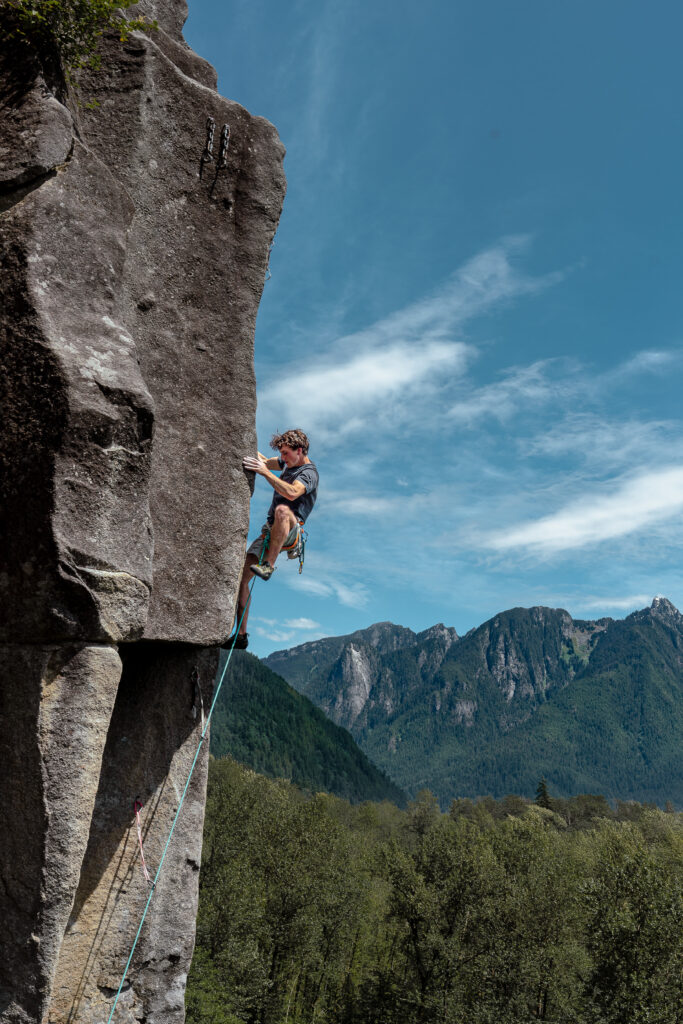
[Adrian Vanoni flying high in Index, WA. Cierra Coppock]
Resources:
- Fuentes, J., Armijo-Olivo, S., Funabashi, M., Miciak, M., Dick, B., Warren, S., … & Gross, D. P. (2014). Enhanced therapeutic alliance modulates pain intensity and muscle pain sensitivity in patients with chronic low back pain: An experimental controlled study. Physical Therapy, 94(11), 1569-1580. https://doi.org/10.2522/ptj.20130358
- Klinger, R., Lang, E., & Schaefer, M. (2017). Nocebo effects in clinical studies: Hints for pain therapy. Journal of Pain Research, 10, 877–883. https://doi.org/10.2147/JPR.S141688
- Vlaeyen, J. W. S., Kole-Snijders, A. M. J., Boeren, R. G. B., & van Eek, H. (1995). Fear of movement/(re)injury in chronic low back pain and its relation to behavioral performance. Pain, 62(3), 363-372. https://doi.org/10.1016/0304-3959(94)00279-N
- Wertli, M. M., Held, U., Campello, M., & Weiser, S. (2018). Both positive and negative beliefs are important in patients with spine pain: Findings from the Occupational and Industrial Orthopaedic Center registry. The Spine Journal, 18(8), 1463–1474. https://doi.org/10.1016/j.spinee.2017.07.166

Author Bio
Elliott Tan is currently earning his doctorate in physical therapy at University of Utah in Salt Lake City. A climber that wears many hats, Elliott enjoys splitter cracks, limestone whipper-fests, and board sessions with the boys (and gals and non-binary pals). Upon graduation, Elliott plans on opening a clinic focused on the prevention of injuries in outdoor athletes, straying from the traditional, reactive model of healthcare that is currently the norm. By emphasizing healthy movement as a foundation for recreation, Elliott hopes to keep his patients healthy and decrease the time climbers spend away from the activities they love!
You can reach Elliott with any questions or comments at Elliott.tan@utah.edu or his Instagram @eazyet
[Me, moments before whipping off the last move of American Beauty in Wild Iris. Jarrid Nakata]
- Disclaimer – The content here is designed for information & education purposes only and the content is not intended for medical advice.
Related Posts