High-Frequency Low-Volume Approach for Tendon Healing
As climbers, we push our bodies to the limit—pulling, gripping, and hanging from tiny holds, often in challenging conditions. With all the power and endurance required for climbing, it’s no surprise that tendon injuries are some of the most common ailments in our sport. Whether it’s a nagging shoulder pain, Achilles tendinopathy, or elbow tendinosis, tendon pathologies can sideline us for weeks, or even months, forcing us to change our climbing routine.
One of the most common mistakes people make after an injury is to completely rest for several weeks. After resting for a while, the pain might subside, but then what happens when you go back to climbing? The pain comes back. Although an initial period of rest may be crucial for certain injuries, proper recovery doesn’t always mean resting until the pain is gone—in fact, one of the most effective strategies for tendon rehab is high-frequency loading. This approach might sound counterintuitive at first, but research and practical experience are increasingly showing that frequent, controlled loading can promote faster tendon recovery and better long-term resilience.
In this article, we’ll dive into why high-frequency, low-volume loading, is a game-changer for climbers dealing with tendon injuries, and we’ll look more specifically at medial elbow tendinopathy, or Golfer’s elbow. From improving collagen synthesis to enhancing tendon strength, we’ll explore how strategically increasing the frequency of low-intensity exercises can speed up healing, reduce pain, and help you get back on the wall sooner. If you’re struggling with a tendon issue and don’t want to be benched for months, keep reading to discover how consistent, targeted loading could be the key to your recovery and ultimate performance.
Physiology
First, let’s go over some basic physiology of tendon pathology and healing.
What exactly are tendons?
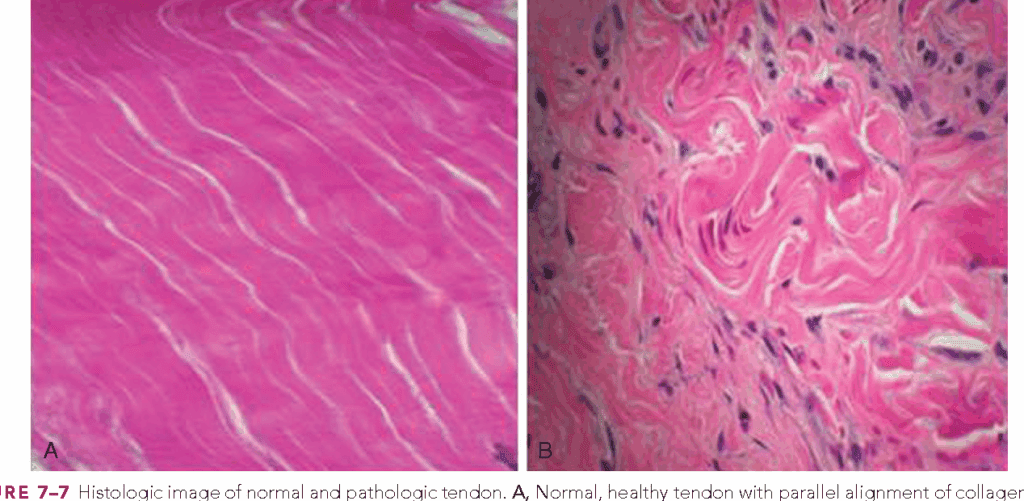
Tendons are tissues that connect muscles to bones. They transmit forces from our muscles which allow us to move our body. Tendons are made up of strong collagen fibers. Healthy tendons have collagen fibers that are organized and aligned with each other.
What happens when we overuse tendons?
When a tendon is subjected to repetitive stress (like climbing too much and resting too little), the fibers in the tendon can break down. This leads to pain, swelling, and stiffness.
- Inflammation: as the body tries to heal itself, extra blood will go to the injured area. This is the body’s way of bringing nutrients to the area to begin the healing process. This phase should only last a few days, so if you’ve had a nagging injury for over a month, it’s likely you’re not in the inflammatory phase any more.
- Disorganized healing: as the tendon tries to repair itself, the new fibers might not be aligned properly. This will lead to a more disorganized structure and causes the tendon to be weaker and more prone to injury.
What is tendon remodelling?
This is the process where the tendon heals and regains its proper structure. This leads to a stronger, more resilient tendon. Tendon remodelling takes time, and it needs to be done properly to get the best results. This is where controlled loading comes into play.
- Rather than letting the tendon rest completely, loading it in a controlled manner will help the tendon gradually regain its strength and structure.
- When a tendon is loaded, it stimulates healing cells to produce more collagen and growth factors (chemical messengers that promote healing). This leads to a more organized collagen structure and a stronger tendon, and prevents adhesions in the tendon tissue (Muller et al.).
- It is very important not to overload the tendon during this phase. You shouldn’t be pushing through sharp pains while loading, and you don’t want it to hurt more the next day. Those are signs that you’ve done too much, and you should back off a bit.
Knowing the physiology behind tendon remodelling, a high-frequency, low-volume loading approach makes sense. This type of intervention involves loading a tendon multiple times throughout the day or week to stimulate remodelling, but at a low volume and intensity. Stimulating the tendon more frequently could maximize tendon remodelling and expedite recovery. The load should gradually increase over time to increase the capacity of the tendon.
Research Support
A recent retrospective study by Gilmore et al. investigated the effects of different types of finger-loading programs on climbers. The study compared two protocols: the ‘Max Hang’ protocol and the ‘Abrahang’ protocol. The Max Hang protocol involved performing dead hangs on a 20mm edge at 85-95% of one’s one-rep max (1RM) for six 10-second repetitions, with 2 minutes of rest between each set. In contrast, the Abrahang protocol utilized significantly lower intensity—about 40% of 1RM or a perceived exertion of 2/10—on an 18-22mm edge. Climbers kept their feet on the ground, making the exercise accessible even to those with injuries or pain. The Abrahangs protocol was designed to be performed daily, either 6 hours before or after a climbing session, and only took 10 minutes per session.
Surprisingly, the study found no significant difference in strength gains between the two protocols. This suggests that high-frequency, low-intensity loading—such as the Abrahangs protocol—provides enough stimulus to strengthen the finger flexor tendons. While the Max Hang protocol might appeal to advanced climbers seeking maximal strength, the Abrahangs approach offers a more tendon-friendly option, particularly for those recovering from injuries or managing pain.
For climbers dealing with tendinopathies, this finding is crucial. Pain often limits the ability to perform high-intensity loading safely. Low-intensity, high-frequency protocols provide a viable alternative, allowing climbers to continue strengthening their tendons without exacerbating symptoms. Moreover, these protocols could serve not just as a rehabilitation tool but also as a preventive measure, integrating seamlessly into a climber’s daily routine to build tendon resilience over time.
Application of high-frequency training
A common tendinopathy that climbers experience is medial elbow tendinopathy.
For climbers recovering from medial elbow tendinopathy (Golfer’s elbow), a high-frequency, low-intensity loading protocol can be a game-changer. By targeting the affected tendon with consistent, controlled stimulus, you can promote tendon remodeling and gradually restore strength and resilience. Below is a step-by-step example of a practical protocol tailored for medial elbow tendinopathy:
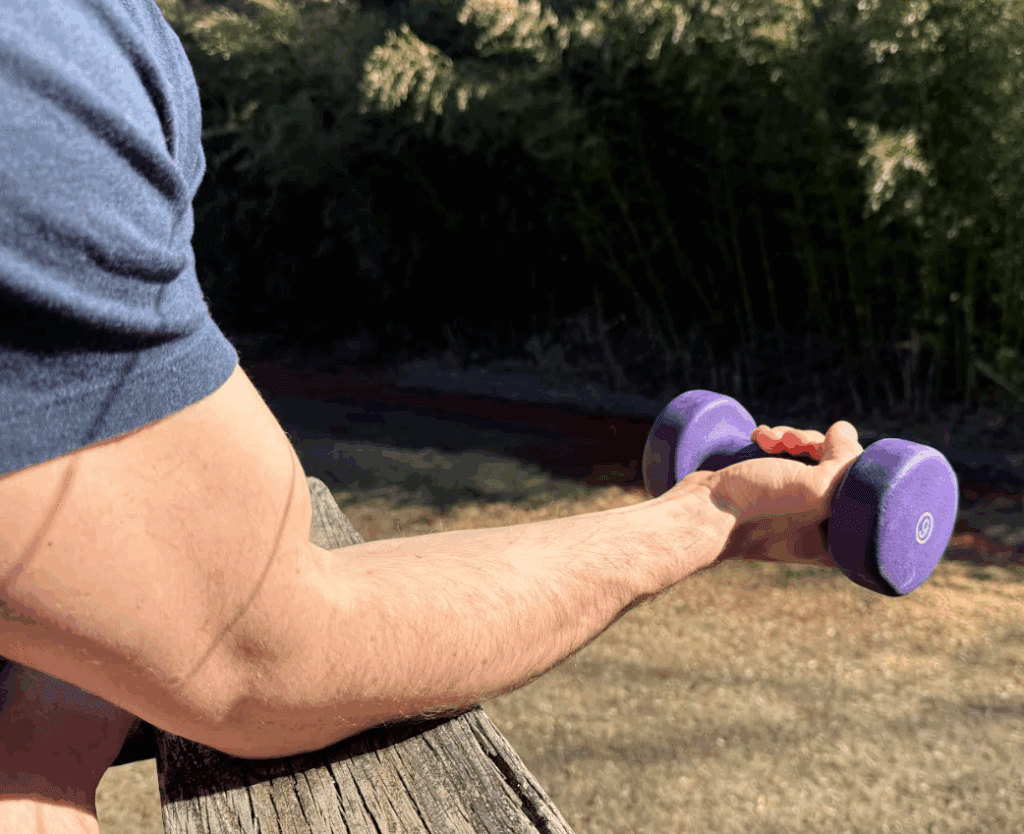
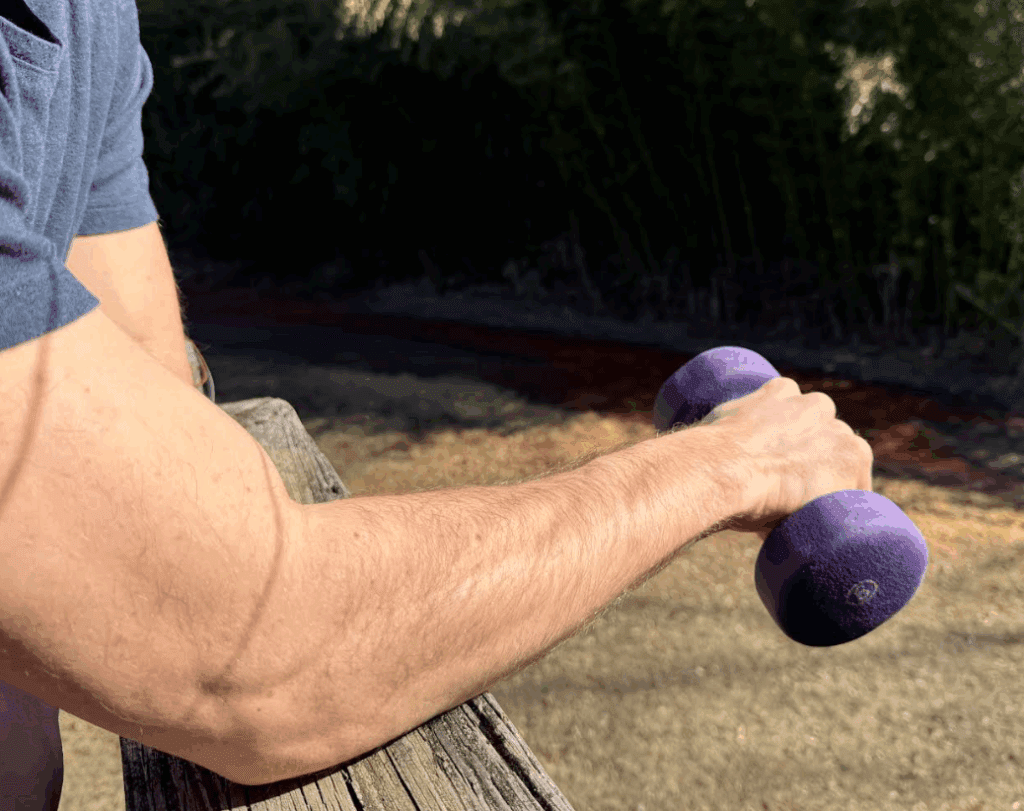
1. Isometric Wrist Flexion
- Setup: Sit or stand with your forearm resting on a flat surface, palm facing up. Hold a light resistance band or dumbbell (1-3 lbs to start).
- Execution: Gently pull upward against the resistance (as though curling your wrist) and hold the position without moving for 10-15 seconds.
- Dosage: 3-5 repetitions per session, performed 2-3 times per day, with at least 6 hours between sessions. Gradually increase the resistance over time.
2. Isometric Wrist Extension
- Setup: Similar to wrist flexion, but with the palm facing down. Hold a light resistance band or dumbbell (1-3 lbs to start).
- Execution: Pull upward against the resistance (as though lifting your wrist) and hold for 10-15 seconds.
- Dosage: 3-5 repetitions per session, performed 3-4 times per day. Progressively increase the resistance as tolerated.
3. Finger Isometric Holds
- Setup: Use a grip trainer or hangboard with a large edge (e.g., 20mm). Keep the intensity low—around 40-50% of your maximum effort.
- Execution: Apply gentle pressure with your fingers, maintaining the position for 10 seconds without fully engaging your forearm muscles.
- Dosage: 3-5 repetitions, performed 3-4 times per day.
4. Active Supination and Pronation
- Setup: Hold a light object (e.g., a hammer or wrench) with your elbow bent at 90 degrees.
- Execution: Slowly rotate your forearm so your palm faces up (supination), then reverse so it faces down (pronation). Perform the movement in a slow, controlled manner.
- Dosage: 10-15 repetitions per session, performed 2-3 times per day.
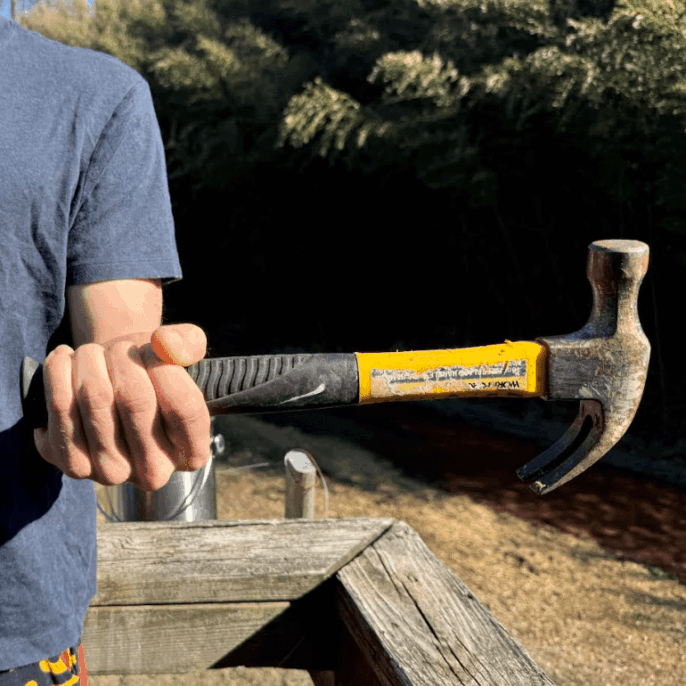
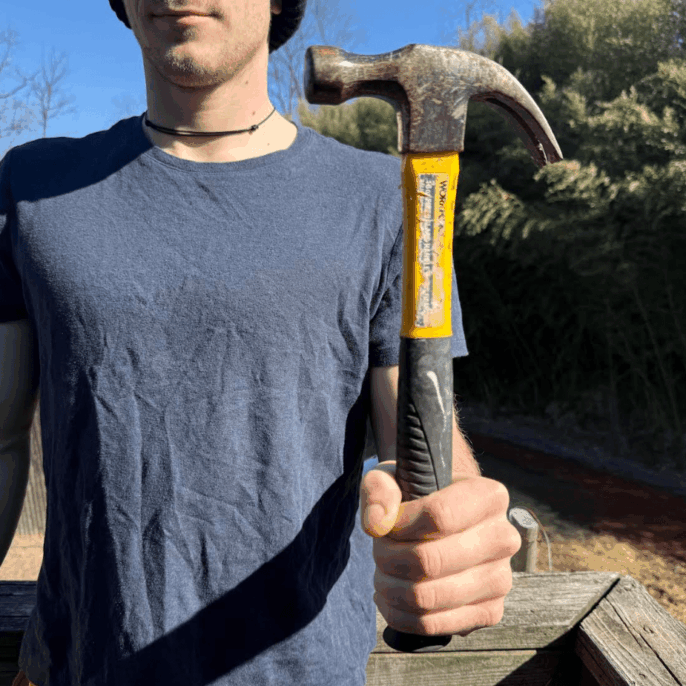
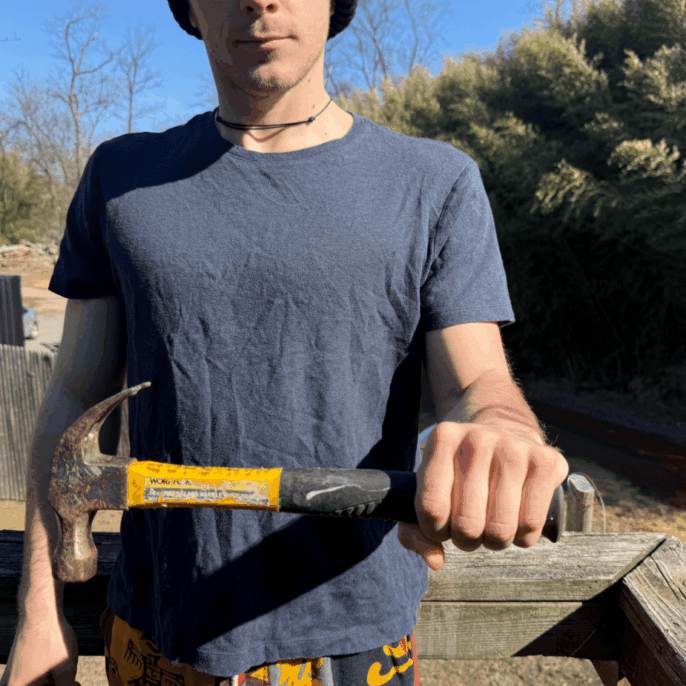
Supination ←————— Neutral wrist —————> Pronation
Key Guidelines for Implementation:
- Listen to Your Body: Avoid sharp pain during or after exercises. Some mild discomfort is okay but should not worsen the following day.
- Gradual Progression: Begin with very light resistance and increase it incrementally every 1-2 weeks, depending on your tolerance.
- Consistency Over Intensity: The goal is not to overload the tendon but to provide regular, gentle stimulation to encourage healing.
By incorporating these exercises into your daily routine, you can stimulate tendon remodeling and build strength while minimizing the risk of further injury. As you progress, you can start introducing more dynamic and heavier loading exercises to fully restore tendon capacity.
Conclusion
Tendinopathies can be frustrating setbacks for climbers, but with the right approach, full recovery is possible. High-frequency, low-volume loading is a modern approach to accelerate tendon healing. By consistently applying controlled stress to the elbow tendons multiple times per day, you can foster tendon remodeling, reduce pain, and return to climbing stronger than before. Consulting with a physical therapist or healthcare provider before starting any rehab program is strongly recommended, and remember to listen to your body as you progress.
Author Bio
Brigitte Cacchione is a Doctor of Physical Therapy student at Rutgers University and a member of the Climbing Special Interest Group. She authored this article with mentorship and support from SIG faculty.
References
- Gilmore, N.K., Klimek, P., Abrahamsson, E., Baar, K. (2024). Effects of Different Loading Programs on Finger Strength in Rock Climbers. Sports Medicine – Open 10, 125 (2024). https://doi.org/10.1186/s40798-024-00793-7
- Muller, S., Todorov A., Heisterback, P.E., Martin, I., Majewski, M. (2015). Tendon healing: an overview of physiology, biology, and pathology of tendon healing and systematic review of state of the art in tendon bioengineering. Knee Surg Sports Traumatol Arthrosc, 23:2097-2105.
- Disclaimer – The content here is designed for information & education purposes only and the content is not intended for medical advice.
Related Posts