Overuse of finger and wrist flexors
Question:
Dr. Jared
I recently read your article in the August issue of Dpm Climbing Magazine. I am a 30 year old novice climber. The reason I write you this morning is that I have enjoyed climbing but I have had to take weeks or months between climbing sessions to let my hands recover. The major symptom is ,an hour before bed and when I wake up in the morning, stiffness in the DIP and PIP joints of my middle finger and ring finger on both hands. Additional to stiffness sometimes I experience a slight itchy or burning sensation. infrequently I suffer the same problem in my index finger but never in my pinky.
I work in a wood/metal working shop and my major hobby is mountain biking. I have seen two doctors, the sports medicine doctor believes I am developing arthritis. Whereas the general practitioner believes I have just over used my hands and I need to let them rest.
Something I have noticed recently is that when I am asleep I tend to curl my hands and fingers toward my elbows. Which causes my hands to go numb. So when I read your article about Carpal Tunnel Syndrome I became curious if there was a connection or something else going on.
I would really appreciate your feedback on the problem.
Justin A.
Answer:
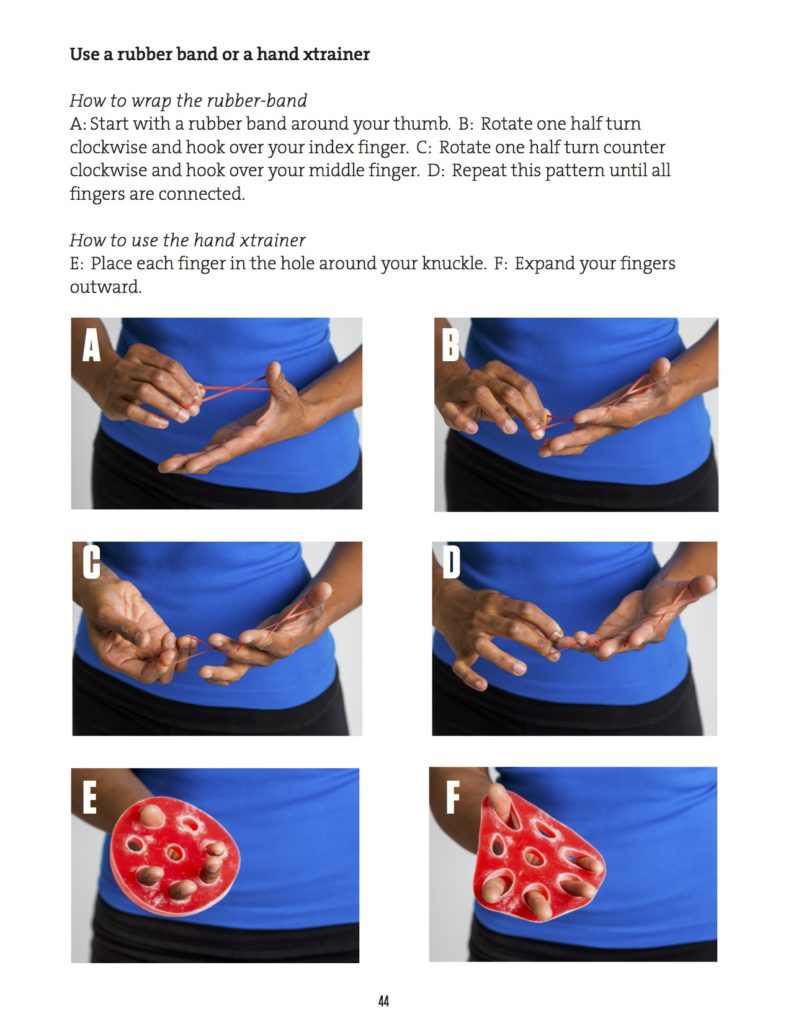
Climbing, mountain biking and metal working all share the commonality of constant and repetitive use of your wrist and finger flexors. It is no wonder that you call asleep with your wrists and fingers curled. This is likely from the shortening of these muscles and weakness of the muscles on the opposite side that extend your fingers and wrist back. It is likely your carpal tunnel is compressed at night when sleeping, causing numbness, but that is not the root of your problem. You will need to stretch out the muscles in the front of your hand and fingers and strengthen the ones in the back to counteract the overuse. It is possible that it is early stage arthritis because of the morning stiffness, but this can be prevented. I have attached some information that can help you and some tips with hand position while climbing.
Dr. Jared Vagy
“The Climbing Doctor”
- Disclaimer – The content here is designed for information & education purposes only and the content is not intended for medical advice.
Related Posts