
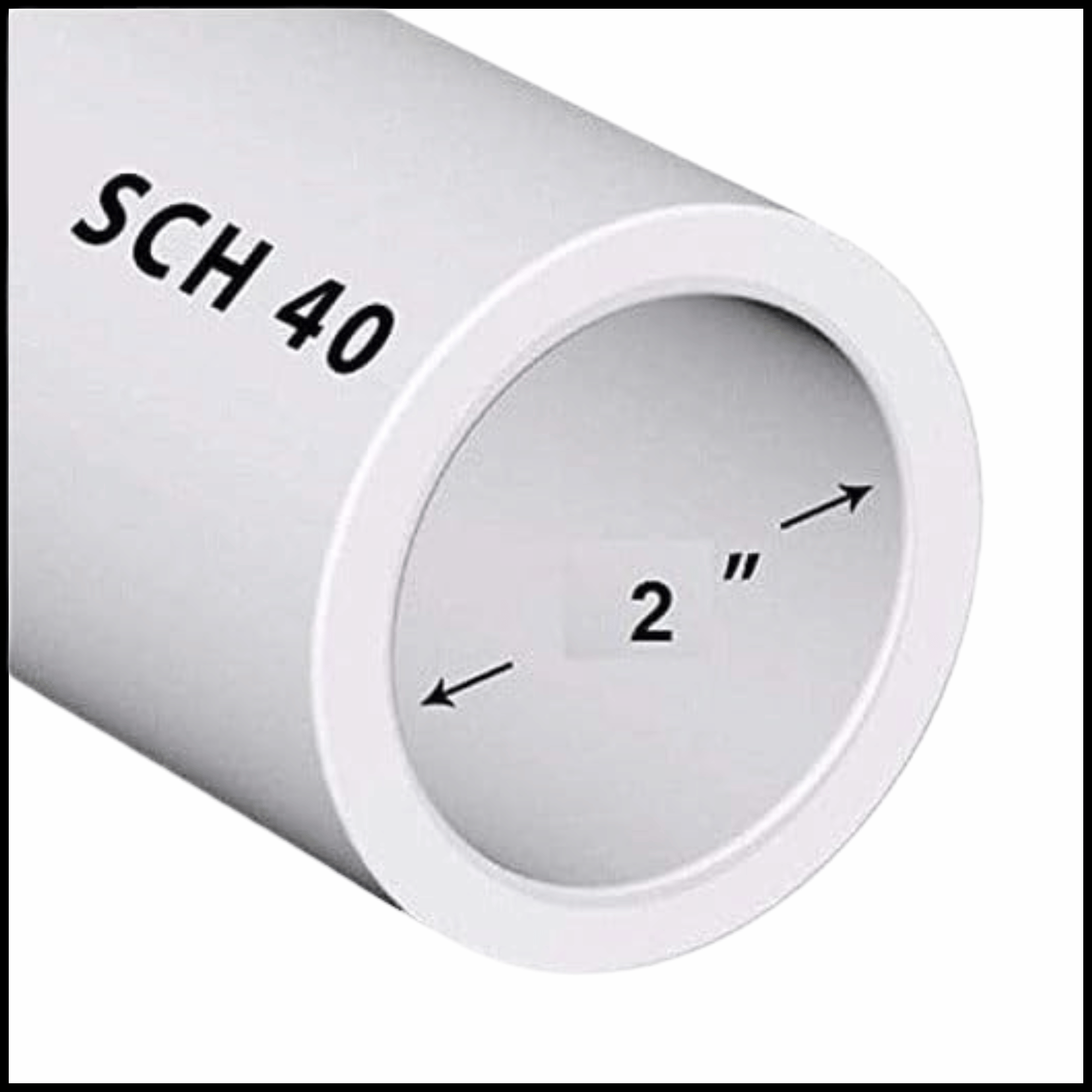
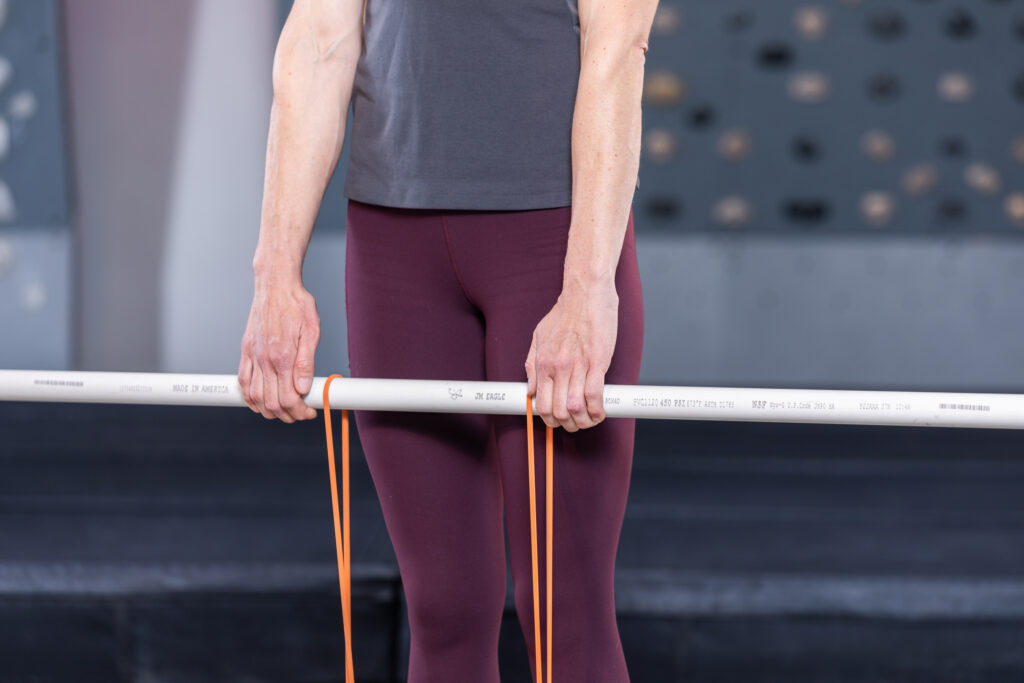
A short section of 2-inch Schedule 40 PVC pipe is a firm, low-cost tool used by climbers for finger and forearm warm-ups. Loop a resistance band around each end of the pipe, step on the middle of the band, and hold the pipe with your fingers. From there, slowly curl the pipe using your fingers and wrists to activate the finger flexors and forearm muscles before climbing. At 18 inches long, it is the perfect length.
PVC Pipe
Description
How is a PVC pipe used for a climbing warm-up?
A PVC pipe can be used with a resistance band to warm up the fingers, wrists, and forearms before climbing. Loop one end of the band around one side of the PVC pipe and the other end around the opposite side. Then place the middle of the band under your feet and hold the pipe with your fingers. Slowly curl the pipe up and down using your fingers. This activates the forearm muscles used for gripping and helps prepare your hands for climbing.
Are there any other uses?
Gentle soft tissue work can be appropriate during certain stages of finger and forearm rehabilitation, but direct rolling over an acutely inflamed or injured area should be avoided. Always follow your physiotherapist’s guidance on when and how to introduce soft tissue work as part of your rehab program.



Reviews
There are no reviews yet.