- Set of 2 compact hangboards with multiple grip options
- Rope suspension for use anywhere — home, outdoors, or on the go
- Can be loaded with additional weights via rod suspension for progressive training
- Load capacity: 150 kg
- Dimensions: 10.5 x 14.3 x 4.5 cm per block
- Material: Skin-friendly beech wood
-
 CLEVO Fingerbloc Mini portable hangboard
-

- Flat, non-latex bands for rehab and light strength work
- 6 resistance levels: XX-Light (4.2 lbs) to X-Heavy (8.2 lbs)
- Sold individually, or as a Beginner or Intermediate set of 3
- Dimensions: 4" wide x 5' long
- Material: Non-latex synthetic rubber blend
-
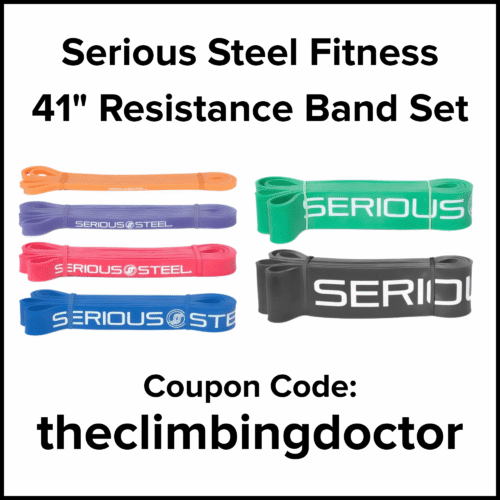
- 41" loop bands in progressive resistance levels
- 6 bundle options, from 3 bands up to the complete set of 6
- Resistance from 2–15 lbs (#0 Orange) to 60–150 lbs (#5 Black)
- Length: 41"
- Material: Natural latex, over 99.9% free of soluble proteins (latex allergens)
- Expected lifespan: 12–18 months with regular home use
-

- Resistance and Pull-Up Assist Bands (32", 37", and 41")
- 12" Short Bands for Hip and Glute Activation
- Mini and Micro-Mini Resistance Bands
- Physical Therapy Exercise Bands
- Latex-Free Resistance Bands
- Band Anchors, Handles, and Accessories
-
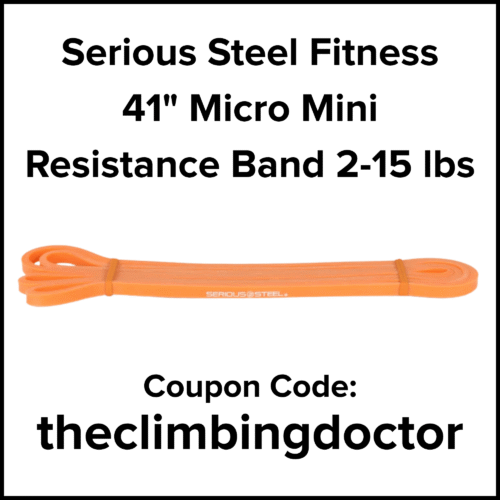
- Lightest band in the 41" range (#0 Orange)
- Resistance: 2–15 lbs
- Dimensions: 41" long, 1/4" wide, 4.5 mm thick
- Material: Natural latex, over 99.9% free of soluble proteins (latex allergens)
- Expected lifespan: 12–18 months with regular home use
-

- Closed-loop mini bands for hip and glute activation
- Set of 3: Orange (2–15 lbs), Purple (5–35 lbs), and Red (10–50 lbs)
- Also sold individually in 5 resistance levels, from 2–15 lbs to 50–120 lbs
- Length: 12"
- Material: 15 layers of natural latex with a protective coating
- Expected lifespan: 12–18 months with regular home use
-
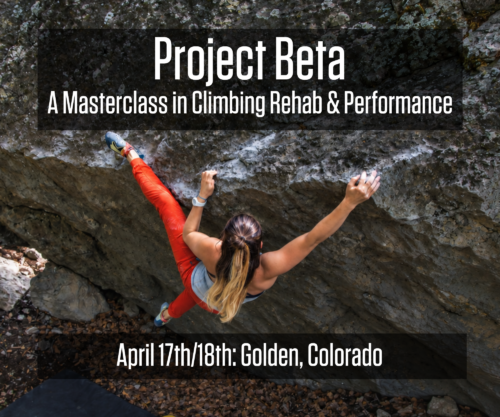 When a climber gets injured, rehab becomes their next project, and you’re the clinician they trust to help them get back on the wall. This hands-on masterclass shares how we assess, treat, and train climbers, with practical clinical tips and decision-making woven throughout. You’ll start with movement assessment on the wall, explore manual therapy and reassessment, then apply those principles to injuries across different body regions. You’ll also learn how to build rehab programs, dose training, and guide climbers back to their hardest projects. This course is completely different from the Clinical Management of the Injured Climber course. If you’ve taken that course, you’ll find a distinct format, focus, and set of practical skills here.
-
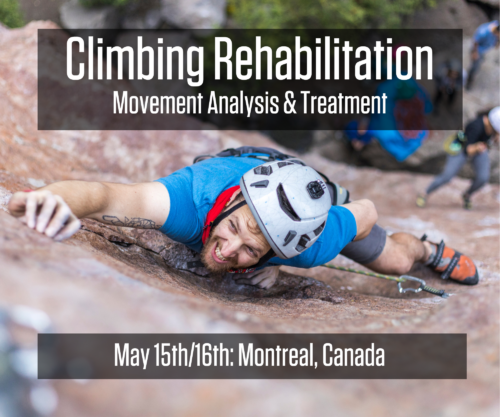 This course teaches clinicians how to analyze climbing movement and translate what they observe on the wall into a focused assessment and individualized treatment plan. Each section begins with a specific climbing movement, identifies the mobility, strength, and motor-control demands required to perform it, and uses targeted clinical tests to determine what may be limiting the climber. Participants will then follow the findings through the complete treatment process, including manual therapy, therapeutic exercise, movement retraining, and climbing-specific progression. Each movement is retested to evaluate the climber’s response and guide the next stage of rehabilitation. Through this practical movement-to-assessment-to-treatment framework, clinicians will learn how to connect what they see on the wall with what they assess and treat on the table.
Each day is a complete, stand-alone course. Participants can register for Day 1, Day 2, or both.
-
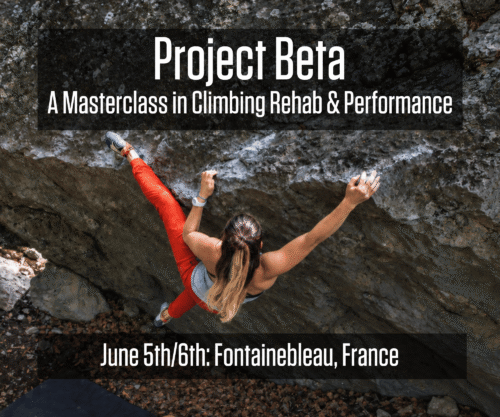 When a climber gets injured, rehab becomes their next project, and you’re the clinician they trust to help them get back on the wall. This hands-on masterclass shares how we assess, treat, and train climbers, with practical clinical tips and decision-making woven throughout. You’ll start with movement assessment on the wall, explore manual therapy and reassessment, then apply those principles to injuries across different body regions. You’ll also learn how to build rehab programs, dose training, and guide climbers back to their hardest projects. This course is completely different from the Clinical Management of the Injured Climber course. If you’ve taken that course, you’ll find a distinct format, focus, and set of practical skills here.
-
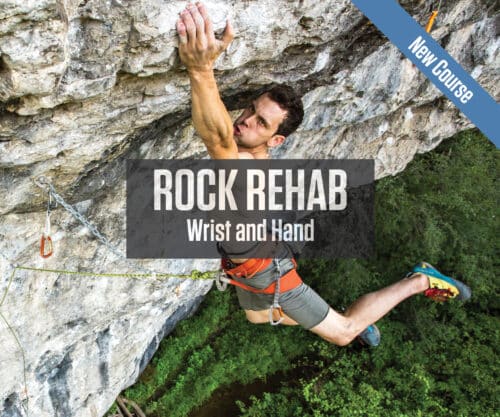 This continuing education course is for medical professionals and coaches looking to advance their knowledge in assessing, diagnosing and treating wrist and hand injuries with rock climbers. The material is highly interactive with an emphasis on case based learning and practical application. At the conclusion of the course, you will have a greater understanding of how to assess and rehabilitate climbing wrist and hand injuries.*Course fees do not include tax and/or VAT. Additional taxes will be calculated separately at checkout based on your geographic location.
-
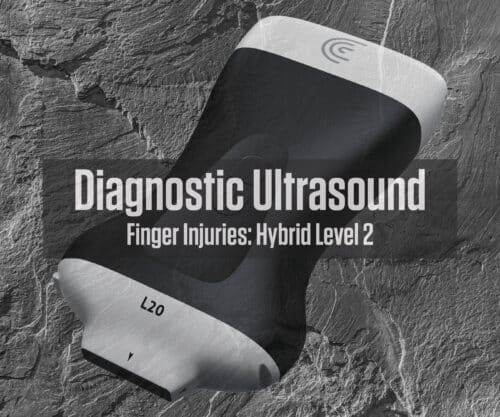 This level 2 continuing education course is for clinicians to gain confidence in assessing, diagnosing and treating rock climbing finger injuries with diagnostic ultrasound. You will again access to the level 1 online course that includes 3 hours of pre-recorded lectures, associated articles, and learning assessments. You will then meet for a 4 hour live session to problem solve rock climbing patient cases with realtime ultrasound demonstrations and will discuss your patient images with an certified ultrasound expert. It is recommended that you have access to an ultrasound unit before taking this course.
-
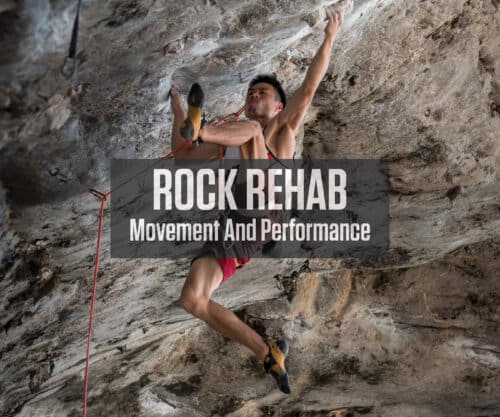 This continuing education course is for medical professionals and coaches looking to advance their knowledge in understanding movement analysis and performance testing. The material is highly interactive with an emphasis on case based learning and practical application. At the conclusion of the course, you will have a greater understanding of climbing movement and performance. *Course fees do not include tax and/or VAT. Additional taxes will be calculated separately at checkout based on your geographic location.